



Epstein's ties to science: Did disturbing theories infiltrate academia?
New documents reveal Jeffrey Epstein's deep financial ties to top scientists at Harvard and MIT, raising concerns about the influence of his disturbing theories on academic research.


By Ahmet Taş | Wise News Press
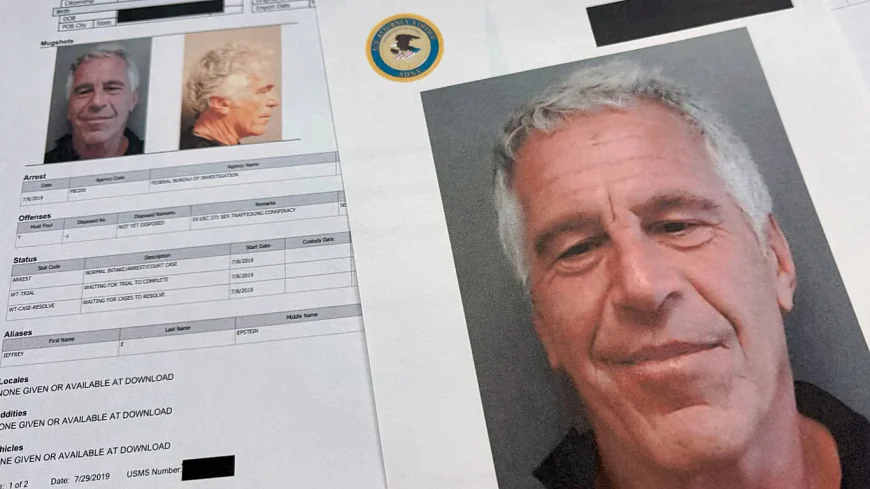
NEW YORK, USA — Documents released by the US Department of Justice since late last year reveal that convicted sex offender Jeffrey Epstein invested millions of dollars in scientific projects and prioritized socializing with prestigious researchers, raising alarming questions about the extent of his influence within the scientific community.
Despite his 2008 conviction for sex crimes involving minors in Florida, Epstein's relationships with academics not only continued but deepened from the early 2000s until his death.
The allure of funding
According to reporting by Scientific American, the most immediate answer to why scientists were drawn to Epstein is money. Bruce Lewenstein, a science communication expert at Cornell University, explained that "scientists need patronage, support."
"Wealthy patrons have been funding scientists for centuries, paying for telescopes to search the atmospheres of alien planets, brain mapping institutes, malaria prevention experiments, and much more. This has been the case for 400 years," Lewenstein noted. Unlike many donors, Epstein generally did not ask for his name to be on buildings, funding everything from dance companies to the Council on Foreign Relations, as reported by the Miami Herald.
Deep ties to Harvard and MIT
According to Ghislaine Maxwell, Epstein's former girlfriend and partner, he was particularly interested in brain research. Through connections forged by her father, publishing magnate Robert Maxwell, Epstein was introduced to the Santa Fe Institute and numerous renowned scientists.


Harvard University stands out as one of the primary institutions Epstein cultivated. Before his 2008 conviction, he donated over $9 million to Harvard, $6.5 million of which went to the Program for Evolutionary Dynamics (PED) led by mathematician Martin Nowak. Epstein continued to visit the program after his conviction, reportedly visiting more than 40 times in 2018 alone and even maintaining an office there.
Nowak, a former board member of Scientific American, wrote in a 2009 email to Epstein: "I am on the newly formed advisory board of Scientific American... Almost everyone there seems to be your friend." Following an investigation in 2021, Harvard sanctioned Nowak, though these restrictions were lifted in 2023.
Other prominent figures in Epstein's network included Harvard physicist Lisa Randall, geneticist George Church, and former Harvard President Larry Summers. Epstein also donated to the Massachusetts Institute of Technology (MIT), including $525,000 to the Media Lab and $225,000 to professor Seth Lloyd. An MIT investigation found these donations occurred after his 2008 conviction and outside normal channels.


A controversial "Visiting Fellow"
Perhaps most shockingly, Epstein served as a "Visiting Fellow" at Harvard's Department of Psychology during the 2005-2006 academic year after donating $200,000, despite lacking a college degree or academic qualifications.
According to Scientific American, in his application, Epstein proposed studying "social prosthetic systems," writing: "Other people can act as 'prosthetics' to the extent that they augment our cognitive abilities and help us regulate our emotions, thus serving essentially as extensions of ourselves."
Eugenics and disturbing theories
The documents suggest Epstein did not just fund science but sought to influence it with his own disturbing ideas. He was reportedly obsessed with eugenics and the idea of seeding the human race with his own DNA.
He commissioned genetic tests through a doctor at Massachusetts General Hospital, identified as Dr. Joseph Thakuria. A 2014 proposal from Thakuria asked Epstein to fund a study sequencing patients' genomes, and documents mention exclusive genetic screening options for Epstein.
The Deepak Chopra connection
The documents also highlight Epstein's interactions with Deepak Chopra, the alternative medicine advocate. Chopra frequently updated Epstein on his work with Harvard professors and sought his advice on fundraising.
In one instance, Chopra communicated with Epstein about a potential collaboration with Pfizer to commercialize findings from a study on the "placebo molecular signature." "Look what you started!!!! The head of clinical research at Pfizer is interested!!" Chopra wrote in an email to Epstein.
These revelations paint a picture of a "collector of people" who used his wealth to buy legitimacy and access to the world's intellectual elite, potentially contaminating the integrity of the institutions he courted.
What's Your Reaction?
 Like
0
Like
0
 Dislike
0
Dislike
0
 Love
0
Love
0
 Funny
0
Funny
0
 Wow
0
Wow
0
 Sad
0
Sad
0
 Angry
0
Angry
0

Editor | Wise News Press — Delivering accurate, timely global news with integrity, insight, and editorial responsibility.

















Comments (0)