



Kurdish-Language Education Would Be a 'Disaster': The Real Threat to Turkey's Peace Process
Columnist Mümtaz'er Türköne argues that Kurdish-language schooling would be a 'disaster' for Kurdish identity. He analyzes how political competition, not principle, threatens Turkey's peace process.


WISE NEWS PRESS / ANKARA, TURKEY — Nov. 11, 2025
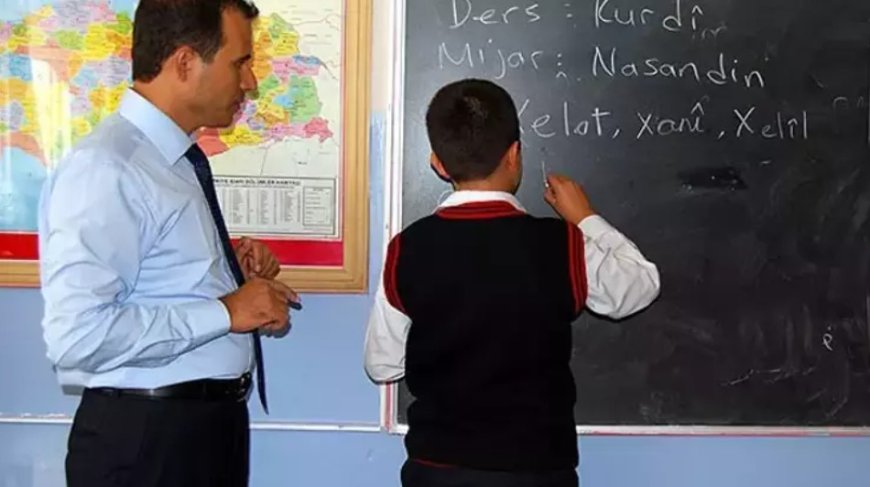
Imagine the seemingly impossible scenario today: Schools, and even universities, open providing education in the Kurdish language. Curriculum units prepare Kurdish syllabi, textbooks are printed, and teachers begin explaining Mathematics, Geography, and Geology in Kurdish.
If this vision were to materialize, what would happen?
In my opinion, it would be a complete disaster—the greatest calamity to befall Kurds and the Kurdish language.
You can take religious education as a precedent. For 23 years, our government has gradually transformed all schools into Imam Hatips (religious vocational schools). The path for Quran courses was opened entirely, and religious education achieved a privileged status within the state. The result? A complete disaster for the sake of religion and piety. The "backyards" became concrete spaces where young people snuck cigarettes, played football, and debated deism during breaks.
To render unusable and unrecognizable everything concerning our existential conditions, the art, literature, cultural heritage, and shared values that elevate us as human beings, you need only hand it over to the Ministry of National Education, rather than a vandal.


After seeing our children who cannot construct a single sentence in English following hundreds of hours of lessons, consider the state of young people learning Kurdish in state schools. Would Kurdish-language schools become the backyard of the Kurdish political movement, or, by taking on all the unpleasantness and repulsion of official state management, would they become a bottomless pit for the language?
Three Factions Opposing the Process


In the constitutional discussions and debates confined by prejudices rooted in nationalism, three distinct groups stand out against the ongoing Peace Process (Çözüm Süreci):
-
Kurdish Nationalists: They object to the Process being focused on Öcalan and the DEM Party, primarily resisting any abandonment of the nation-state goal. This group is small and mostly active in the diaspora, particularly in Europe, posing little real threat to the mainstream Kurdish political movement.
-
CHP Nationalists: This segment represents a commitment to the nation-state distinct from regular nationalism, often leaning towards secular-leftist tendencies. The CHP (Republican People’s Party) is a coalition of nationalists, social democrats, and Alevi-Bektashis. The nationalists, concentrated along the coastal areas, maintain significant influence over the CHP's identity.
-
Non-MHP Nationalist Parties: This includes İyi Party, Victory Party, and the emerging Key Party. Since MHP Leader Bahçeli is the main determining actor in the Process, he has effectively invalidated all doctrinaire objections from within the nationalist tradition. Their criticisms remain purely political.
Crucially, aside from the Kurdish nationalists, there is no segment fundamentally resisting the Process on a matter of principle. All criticisms and debates revolve around procedural issues, such as delegations visiting İmralı (Öcalan's prison), periodic constitutional discussions, and painful reminders of the past.
The Real Danger: Political Rivalry
The Turkish bus, slowly moving along the road, has arrived at a crossroads. The path forward is clear. However, as everyone rapidly takes the turn, they are simultaneously settling their own political scores. The reason for the intense discussions is not the solution to the Kurdish issue itself, but rather these subtle calculations rooted in political competition. Everyone believes the Process is a state project backed by solid guarantees and planning.
The danger facing the Peace Process does not stem from its own parameters or dynamics. The Process is under threat from those who indirectly instrumentalize it for political showdowns. The rivalry for power has intensified. As the belief that the quarter-century-long rule is drawing to a close gains ground, there is a risk.
The only real danger is the ruling party exploiting the Process to cling to power, or the opposition exploiting it to seize power.
They don't need axes to directly hack the Peace Process. It is enough for them to sink the solid foundations upon which the Process should rise into a swamp. The solid foundation consists of democracy and law. Any attempt to disrupt democracy or prevent the rule of law from operating will act as a wedge against the Process.
The parties responsible for the threat should not be sought among the Process participants but rather among the direct or indirect actors of the political rivalry for power.
What's Your Reaction?
 Like
0
Like
0
 Dislike
0
Dislike
0
 Love
0
Love
0
 Funny
0
Funny
0
 Wow
0
Wow
0
 Sad
0
Sad
0
 Angry
0
Angry
0

Editor | Wise News Press — Delivering accurate, timely global news with integrity, insight, and editorial responsibility.














Comments (0)