



Zelensky: Ukraine needs 100-120 Patriot missiles a month this winter
Zelensky said Ukraine needs 100-120 Patriot interceptors a month this winter and expects the new Freya air-defense system to be tested by year-end.


By Ahmet Taş | Wise News Press
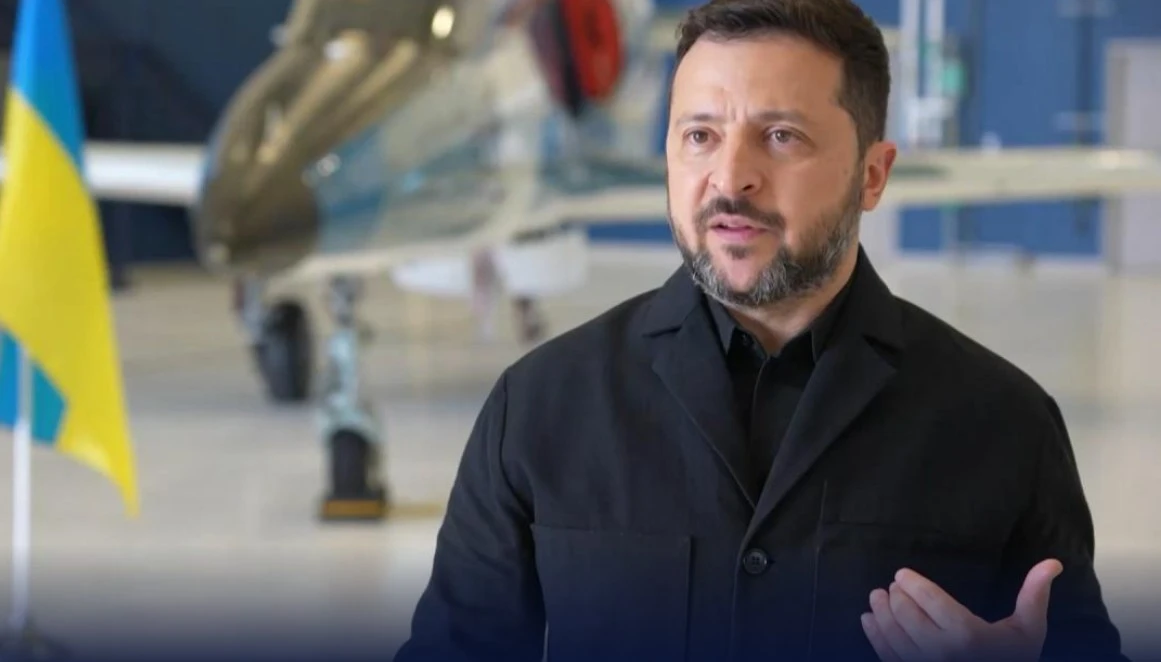
NORTH BAY, CANADA — Ukrainian President Volodymyr Zelensky said Ukraine needs roughly 100 to 120 Patriot interceptor missiles every month during the winter to withstand continued Russian ballistic missile attacks and protect critical infrastructure.
Speaking in an exclusive interview with Deutsche Welle during a visit to Canada, Zelensky also discussed a new European air-defense project known as Freya, joint drone production with Canada and the possibility of meeting Russian President Vladimir Putin in person. The Ukrainian leader said Kyiv hopes to test the first Freya system before the end of 2026.
Ukraine says it needs 100-120 Patriot missiles every month
Air defense was one of the central themes of Zelensky’s interview as Ukraine prepares for another winter under the threat of large-scale Russian missile and drone attacks.
Zelensky said Russia is capable of producing roughly 140 ballistic missiles a month, according to Ukraine’s estimates.
He argued that standard air-defense planning can require more than one interceptor for a single incoming ballistic missile, meaning Ukraine’s theoretical demand could be significantly higher than the number of missiles currently available.


In practice, Zelensky said Kyiv is seeking a more achievable supply level.
He said Ukraine would need approximately 100 to 120 Patriot interceptors a month during the most difficult winter period.
That level of supply would still represent a major financial, industrial and logistical challenge for Ukraine’s partners.


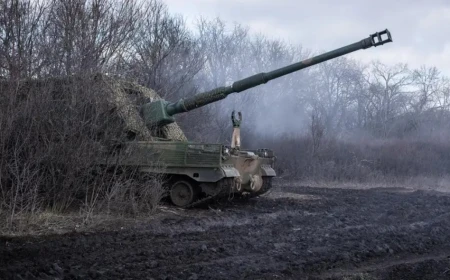
Patriot systems remain among Ukraine’s most important defenses against ballistic missiles, including Russian Iskander-type weapons that are difficult for many other Ukrainian air-defense systems to intercept.
European governments have therefore faced growing pressure from Kyiv to release additional missiles from existing military stocks while manufacturers work to increase production.
Freya air-defense system could be tested by year-end
Zelensky also provided new details about the European Freya air-defense project, which Ukraine hopes could eventually supplement its reliance on U.S.-made Patriot systems.
According to the Ukrainian president, the goal is to deliver a first version of the system to Ukraine and begin testing it under operational conditions by the end of 2026.
If the trials are successful, the project could then move toward larger-scale production.
Zelensky described the initiative as an ambitious but potentially important step toward creating additional European air-defense capacity.
The broader concept is to combine European industrial production with Ukraine’s experience of defending against large numbers of missiles and drones during the war.
Such systems would not immediately replace Patriot batteries, particularly for the interception of advanced ballistic missiles. But an additional European-made layer of air defense could free more expensive Patriot interceptors for the targets against which they are most urgently needed.
For Kyiv, the long-term objective is to diversify its air-defense architecture rather than depend on one weapons family and one supply chain.
Canada backs Ukraine’s winter air-defense preparations
Zelensky’s visit to Canada also focused heavily on preparations for the coming winter.
Canada has announced additional funding intended to help Ukraine obtain critical air-defense equipment and interceptor missiles.
Kyiv is seeking both newly manufactured weapons and faster access to missiles already held in allied inventories.
The problem is largely one of timing.
Even when countries sign contracts for hundreds of new interceptors, manufacturing schedules can stretch over several years. Ukraine, by contrast, needs large quantities of ammunition immediately to counter Russian attacks during the coming months.
Zelensky has repeatedly asked European governments to transfer available Patriot missiles now, with the expectation that those national inventories could later be replenished by new production.
The strategy reflects the urgency facing Kyiv: long-term contracts may strengthen Ukrainian air defense in future years, but they cannot by themselves protect electricity networks, cities and heating infrastructure this winter.
Ukraine and Canada move toward joint drone production
Beyond air defense, Zelensky said Ukraine and Canada were expanding defense-industrial cooperation in the field of unmanned aerial systems.
The Ukrainian president said companies from both countries were working toward joint drone production, building on Ukraine’s rapidly developed wartime expertise in unmanned systems.
Ukraine has become one of the world’s largest users and developers of military drones since Russia’s full-scale invasion, producing systems ranging from short-range reconnaissance aircraft to long-range strike drones.
Kyiv increasingly wants to transform that wartime innovation into permanent international industrial partnerships.
Joint production abroad could provide several advantages: greater access to components, larger manufacturing capacity, more resilient supply chains and production facilities located beyond the reach of Russian missile attacks.
For Canada, cooperation with Ukrainian manufacturers also offers direct access to technologies and battlefield experience developed during one of the most drone-intensive conflicts in modern warfare.
The initiative is part of a wider shift in Ukraine’s relationship with Western allies — from receiving finished weapons toward developing and manufacturing defense systems jointly.
Zelensky says he is ready to meet Putin
Diplomacy was another major subject of the interview.
Zelensky said he would be prepared to attend the planned G20 summit in Miami and meet Russian President Vladimir Putin if such a meeting could produce concrete decisions.
The Ukrainian president emphasized that the value of direct talks would depend on their results rather than symbolism or public statements.
His comments come as Washington continues efforts to revive negotiations between Ukraine and Russia.
Kyiv has repeatedly said it is prepared for diplomacy but insists that any settlement must provide credible security guarantees and protect Ukrainian sovereignty.
Moscow and Kyiv remain far apart on several of the most difficult questions, particularly territory and long-term security arrangements.
It is also not yet clear whether the political and logistical conditions for a Zelensky-Putin meeting at the G20 will materialize.
Still, Zelensky’s comments indicate that Ukraine is not ruling out direct leader-level diplomacy while continuing to seek additional Western weapons.
Winter air defense remains Kyiv’s immediate priority
Despite discussions about negotiations, drone production and future European defense systems, Zelensky’s immediate message was focused on the coming winter.
Russia has continued large-scale attacks involving hundreds of drones and missiles, frequently targeting Ukrainian energy, transport and civilian infrastructure.
Kyiv expects electricity generation and distribution networks to remain among Russia’s most important targets as temperatures fall.
Ukraine is therefore pursuing several strategies simultaneously.
In the short term, it wants allies to provide more Patriot missiles and other interceptors from existing stocks.
In the medium term, Kyiv is seeking higher production rates in the United States and Europe and exploring licensed production of Patriot-related missiles.
Over the longer term, projects such as Freya are intended to expand Europe’s ability to manufacture additional air-defense systems and reduce dependence on limited inventories.
The scale of the challenge is reflected in the figure Zelensky presented during the DW interview: 100 to 120 Patriot interceptor missiles every month during the winter period.
Whether Ukraine’s allies can provide ammunition at anything close to that rate could become one of the most consequential defense questions of the coming months.
For Kyiv, the issue is not only military.
Every interceptor available to Ukraine can potentially determine whether a Russian ballistic missile reaches an electricity plant, transport hub or populated area.
That makes the race to strengthen Ukraine’s air defenses one of the central elements of the country’s preparations for the winter of 2026-27.
WiseNewsPress.com
What's Your Reaction?
 Like
0
Like
0
 Dislike
0
Dislike
0
 Love
0
Love
0
 Funny
0
Funny
0
 Wow
0
Wow
0
 Sad
0
Sad
0
 Angry
0
Angry
0

Ahmet Taş is a journalist, editor and Turkey Office Manager of the Wise News Press Media Group. He works across news, digital media and international publishing, focusing on accurate, responsible and accessible journalism. He contributes to the development of media projects that bring important political, social and global developments to a wider international audience.













Comments (0)