



G7 summit in France puts Ukraine, Iran and trade disputes on agenda
G7 leaders are meeting in France to discuss Ukraine, Iran, the Strait of Hormuz, trade tensions, artificial intelligence and global security.



By Ahmet Taş | Wise News Press
ÉVIAN-LES-BAINS, France — Leaders of the G7 countries are meeting in France for a summit expected to focus on Ukraine, Iran, global trade tensions, artificial intelligence and security risks.
According to BBC Turkish, the summit is taking place from June 15 to 17 in Évian-les-Bains, with France hosting the leaders of the United States, United Kingdom, France, Germany, Italy, Canada and Japan. The European Union is represented by European Council President António Costa and European Commission President Ursula von der Leyen. Several non-G7 countries, including Ukraine, the United Arab Emirates, Qatar and Egypt, have also been invited.
Global crises shape the G7 agenda
This year’s summit comes at a time when multiple crises are shaping international diplomacy. Russia’s war against Ukraine continues to affect European security, the United States and Iran have reached a fragile agreement, the Strait of Hormuz remains central to energy markets, and trade disputes between allies are once again in focus.
The G7 is expected to discuss geopolitical conflicts, Ukraine’s defense needs, European security, Middle East tensions, global trade problems and artificial intelligence. The range of topics shows how the summit has moved far beyond a narrow economic agenda.
French President Emmanuel Macron held a video meeting on June 11 with G7 members and representatives from China, India, Brazil, South Korea and Kenya to discuss global economic governance. That preparatory step underlined France’s effort to frame the summit as a wider discussion on the future of global order.


Ukraine and European security remain central
Ukraine is one of the most important files on the table. Ukrainian President Volodymyr Zelenskyy has been invited to the summit, and US President Donald Trump is expected to take part in a working meeting with him on Tuesday.
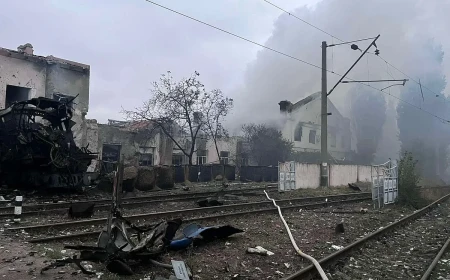
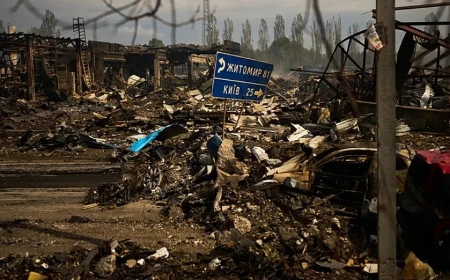
The meeting comes as Ukraine continues to seek more military funding and support from its allies. Although Russia’s advance in Ukraine has slowed, recent days have seen renewed attacks between the two sides.
For European leaders, Ukraine is not only a question of support for Kyiv. It is also a test of Europe’s security architecture. The war has forced NATO and EU countries to rethink defense spending, arms production, air defense, energy security and long-term deterrence against Russia.


G7 leaders are expected to use the summit to signal continued support for Ukraine, though differences may remain over the scale, timing and form of future assistance.
Iran deal and Middle East tensions are on the table
The recently announced US-Iran agreement is also expected to be discussed in Évian. The deal has raised hopes of de-escalation in the Middle East, but world leaders remain cautious about whether it can be implemented.
Macron said ahead of the summit that Iran must not impose transit fees on ships passing through the Strait of Hormuz. In an interview with TF1, he said France would defend international law and do everything possible to ensure that passage remains free of charge.
The Strait of Hormuz is one of the world’s most important maritime energy routes. Any closure, fee system or military escalation there could affect oil prices, shipping costs and global inflation.
The Iran agreement may therefore become both a security issue and an economic issue at the summit.
France and Britain prepare Hormuz mission
Macron also said a joint French-British mission could move very quickly to help ensure the reopening of the Strait of Hormuz. He added that France’s aircraft carrier Charles de Gaulle could reach the region within two or three days if needed.
European countries are particularly concerned that disruptions in the strait could push up energy and goods prices. For economies already dealing with inflationary pressure, the security of maritime routes is a major concern.
The Hormuz discussion also has a wider diplomatic meaning. It will test whether Western powers can support the US-Iran framework while avoiding steps that could be seen as military escalation.
Macron rejected the argument that the agreement represents a victory for Tehran. He said France had not taken part in the attack and would remain cautious and patient as the implementation process begins.
Trump raises tariff threat against France
Trade is another sensitive issue at the summit. Before traveling to France, Trump highlighted tensions with Paris over tariffs and digital taxation.
In an interview with the New York Post, Trump said the United States would have no choice but to impose a 100% tariff on French wine if France does not remove its digital tax on American technology giants.
The warning adds a new layer of tension between Washington and Paris at a summit meant to demonstrate unity among leading economies.
Digital taxation has been a long-running dispute between the United States and several European countries. Washington argues that such taxes unfairly target American technology firms, while European governments say large digital companies should pay taxes where they generate revenue.
The issue may not dominate the public agenda, but it reflects deeper disagreements over technology, tax policy and economic sovereignty.
Artificial intelligence enters the leaders’ agenda
Artificial intelligence is also expected to be discussed. For G7 countries, AI is no longer only a technology issue. It has become a matter of economic competition, national security, labor markets, disinformation and regulation.
The rapid growth of AI has created pressure on governments to coordinate rules on safety, data use, intellectual property, misinformation and critical infrastructure. G7 countries are likely to look for shared principles, even if national approaches differ.
AI also connects to the summit’s broader security agenda. Deepfakes, cyber operations and automated propaganda are becoming part of geopolitical competition. For that reason, the technology debate is closely linked to discussions on democracy and foreign interference.
Invited countries expand the summit’s reach
The invitation of Ukraine, the UAE, Qatar and Egypt shows that this year’s G7 summit is not limited to the seven member states and the EU.
Qatar and Egypt are important diplomatic actors in the Middle East, particularly in negotiations involving Gaza, regional security and humanitarian issues. The UAE is a major energy, finance and diplomatic player in the Gulf. Ukraine’s presence keeps Russia’s war at the center of the summit.
By inviting these countries, France is widening the conversation beyond the G7’s traditional economic framework. The summit is expected to connect European security, Middle East diplomacy, energy routes and global economic stability.
Évian summit becomes a test of coordination
The Évian summit is taking place in a highly complex international environment. G7 leaders must address the war in Ukraine, the future of the US-Iran agreement, energy security, trade disputes, artificial intelligence and global economic uncertainty.
The summit will test whether the world’s leading democracies can coordinate their response to simultaneous crises. Public statements are expected to emphasize unity, but the real challenge will be turning those statements into practical decisions.
For Ukraine, the key question is whether G7 support will translate into more military and financial assistance. For the Middle East, the focus will be on whether the Iran framework can reduce tensions and reopen the Strait of Hormuz. For global trade, the issue will be whether allies can manage their own disputes without weakening the wider economic front.
The outcome of the summit may not resolve all these questions immediately. But the discussions in Évian-les-Bains will show how G7 leaders intend to navigate a world shaped by war, energy risks, technological disruption and renewed great-power competition.
What's Your Reaction?
 Like
0
Like
0
 Dislike
0
Dislike
0
 Love
0
Love
0
 Funny
0
Funny
0
 Wow
0
Wow
0
 Sad
0
Sad
0
 Angry
0
Angry
0

Editor | Wise News Press — Delivering accurate, timely global news with integrity, insight, and editorial responsibility.











Comments (0)