



Ukrainian-born POWs describe why they chose to fight for Russia
Ukrainian-born prisoners who fought for Russia describe how occupation, propaganda, forced mobilisation, prison terms and personal grievances shaped their choices.


By Ahmet Taş | Wise News Press
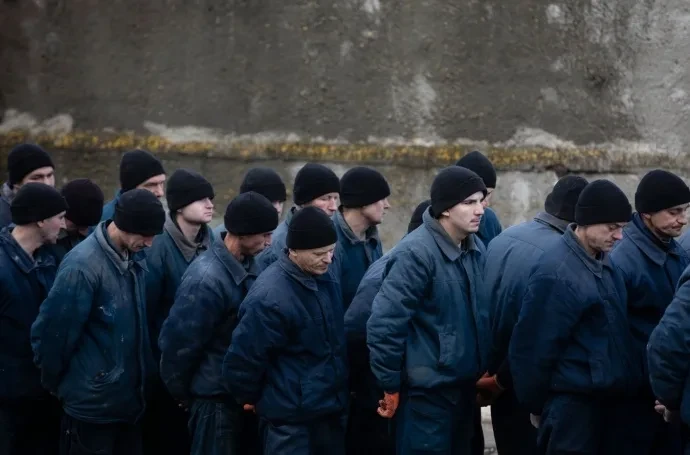
WESTERN UKRAINE — Ukrainian-born prisoners who fought on Russia’s side have described how years under occupation, Russian media influence, forced mobilisation, personal grievances and individual circumstances led them into Moscow’s armed forces.
According to a BBC report cited by Novosti-N, some of the men held in a prisoner-of-war camp in western Ukraine still carry Ukrainian passports despite having taken up arms against their country. Their accounts reveal sharply different motivations: some say they volunteered and identify strongly with Russia, while others say they were forcibly mobilised in Russian-occupied territories.
Ukrainian citizens who ended up fighting for Russia
The profile of Russian prisoners held by Ukraine has changed over the course of the full-scale war, according to the report.
In the early phase of Russia’s invasion, many captured soldiers came from poorer and geographically remote regions of the Russian Federation. More recently, the population in Ukrainian POW facilities has included people from major Russian cities such as St. Petersburg and Yekaterinburg.
Among them is another, more complicated category: Ukrainian citizens who lived in Russian-occupied areas and subsequently fought in Russian or Russia-controlled military formations.


The report says Ukrainian authorities continue to regard these individuals as Ukrainian citizens because Kyiv considers Russian occupation temporary and does not recognise Moscow’s claims over occupied Ukrainian territory.
Those accused of voluntarily fighting against Ukraine may face prosecution for treason or other offences under Ukrainian law. After sentencing, some are reportedly held in facilities that also contain Russian citizens captured during the war.
This creates an unusual legal and political situation in which Ukrainian citizens can simultaneously be criminal defendants and part of the wider prisoner-exchange system.


A generation grew up under Russian occupation
One of the prisoners interviewed by the BBC was identified as Anton.
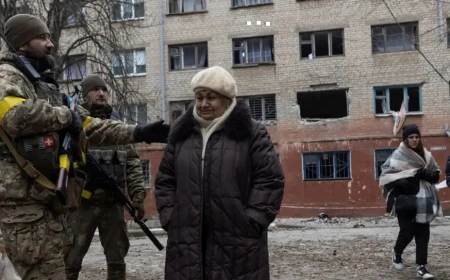
He was 10 years old in 2014 when Russian-backed forces took control of his home region in Donbas. By the time Russia launched its full-scale invasion in 2022, he had reached adulthood.
Anton said he joined Russian forces soon after turning 18 and told the BBC that he did not regret his decision.
He described himself as Russian rather than Ukrainian and said his family roots and national identity were connected to Russia. According to the report, he also referred to Vladimir Putin as “my president.”
His story illustrates one of the long-term consequences of occupation: children who were raised for much of their lives within Russian-controlled education, media and political systems are now old enough to fight.
The BBC report notes that young people growing up in occupied parts of eastern Ukraine have been exposed to Russian school programmes and Kremlin-controlled media narratives for years.
Petro Yatsenko, a representative of Ukraine’s Coordination Headquarters for the Treatment of Prisoners of War, said some Ukrainian-born captives held strongly pro-Russian views and had a blurred sense of national identity.
Personal grievances also shaped decisions
Another prisoner, Artem, came from the Donetsk region and said he volunteered to join Russian forces.
He reportedly fought for around two months before being wounded by multiple fragments.
Artem linked his decision in part to grievances dating back to the fighting that began in Donbas in 2014.
However, his description of service in the Russian military was far from idealised.
He complained about his commander and said he had not received the 400,000 rubles he said had been promised under his contract. Another wounded prisoner, he said, had received a significantly larger payment.
The accounts suggest that support for Russia among some prisoners can coexist with dissatisfaction over treatment by the Russian military itself.
Their reasons for fighting also vary considerably, making it difficult to describe Ukrainian-born fighters on the Russian side as a single political or social group.
Others say they were forcibly mobilised
Not everyone interviewed said they had willingly joined Russian forces.
The report cites intelligence estimates indicating that tens of thousands of residents of Russian-occupied Ukrainian territories have been subjected to forced mobilisation.
One man from Donetsk said he remained in his hometown not because of political loyalty to Moscow but simply because it was his home.
He said he was later forced into military service.
His principal ambition now, according to the report, is to return to his wife and children and withdraw from the conflict entirely.
Forced mobilisation in occupied territories adds another dimension to the status of Ukrainian citizens captured while wearing Russian uniforms.
It raises questions about individual responsibility, coercion and the circumstances under which people living under occupation entered military units controlled by Moscow.
Prison and personal survival became motivations for some
The BBC also spoke to 44-year-old Konstantin, who had been serving a lengthy prison sentence for drug trafficking before being sent to the front.
He explained his decision largely in terms of the years he otherwise expected to spend behind bars.
Konstantin said a 15-year prison term meant he would have been close to 60 by the time he was released.
He acknowledged that this did not necessarily justify his decision but described it as the reality that influenced him.
Another prisoner, Sergey from Luhansk, had entered military service about a decade earlier.
When asked what it meant to shoot at people from the same country, some of the prisoners reportedly hesitated.
Konstantin described the war as especially tragic because of the close family, cultural and historical ties between Ukrainians and Russians, saying many people on both sides have relatives across the border.
Daily life inside the POW camp
The report also provides a glimpse into daily life inside the detention facility.
Prisoners in dark blue uniforms work in several areas of the camp. Some tend strawberry and cucumber beds, while others work in workshops.
One workshop produces wooden coffins. The report notes that previous orders had included garden buildings, creating a stark contrast with the wartime products now being made.
Another workshop produces artificial Christmas trees decorated with bright plastic ornaments.
The prisoners reportedly receive money for their work, which can be used to buy cigarettes and additional food.
A television in the dining area shows educational material challenging Russian historical claims over Crimea, although the BBC reporter observed that many prisoners appeared to pay little attention to the screen.
The BBC said interviews were conducted without guards and cameras present and that prisoners who did not wish to participate were allowed to decline.
Still, statements made by people in detention must be viewed in the context of captivity, where circumstances can affect what individuals are willing to say.
Many fear they will be exchanged last
For Ukraine, captured Russian personnel are also an important part of negotiations aimed at bringing Ukrainian soldiers home.
Prisoner exchanges have repeatedly taken place between Kyiv and Moscow during the war.
But some Ukrainian-born men who fought for Russia believe Moscow gives them lower priority than Russian citizens.
Konstantin said only a small number from their group had been transferred during the year and expressed concern that they could remain in captivity longer than others.
His assessment was simple: he believed they might be among the last prisoners Moscow seeks to exchange.
The stories presented in the BBC report therefore do not point to one explanation for why Ukrainian-born men ended up fighting against Ukraine.
For some, the decision followed years of Russian-controlled education and media exposure after the occupation of parts of Donbas in 2014. Others cited political or personal grievances, financial promises or the prospect of escaping long prison terms.
Another group says it never made a genuine choice at all and was forcibly mobilised.
Together, their accounts illustrate one of the war’s most difficult legacies: more than a decade of occupation and conflict has affected not only territory and political control, but also identity, allegiance and the personal choices of a generation caught between Ukraine and Russia.
WiseNewsPress.com
What's Your Reaction?
 Like
0
Like
0
 Dislike
0
Dislike
0
 Love
0
Love
0
 Funny
0
Funny
0
 Wow
0
Wow
0
 Sad
0
Sad
0
 Angry
0
Angry
0
Ahmet Taş is a journalist, editor and Turkey Office Manager of the Wise News Press Media Group. He works across news, digital media and international publishing, focusing on accurate, responsible and accessible journalism. He contributes to the development of media projects that bring important political, social and global developments to a wider international audience.









Comments (0)