



The Thorny Obstacles: What stands in the way of Russia-Ukraine peace?
While Moscow and Washington suggest a peace deal is nearing, critical disputes over territorial sovereignty and the Zaporizhzhia Nuclear Plant remain major roadblocks.


WISE NEWS PRESS / ANKARA, TÜRKİYE — 02 JANUARY 2026
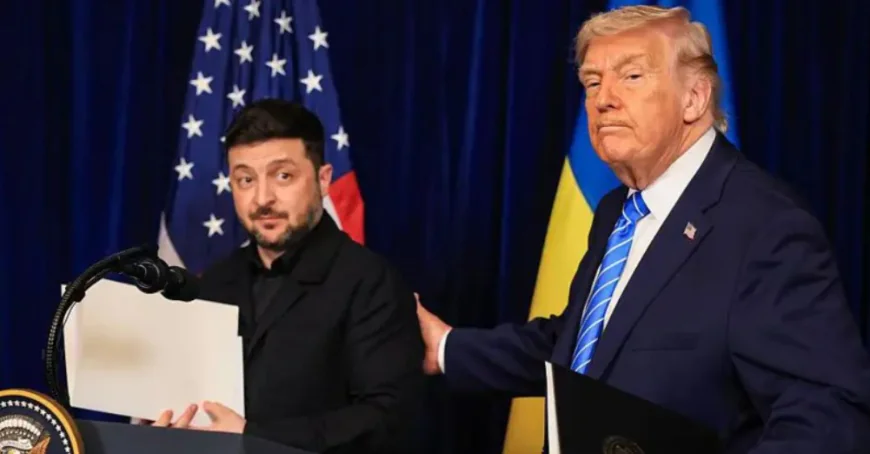
Russia, the United States, and Ukraine have reached a consensus that an agreement to end the nearly four-year-long war is within reach; however, "thorny" issues regarding territorial control and strategic infrastructure remain unresolved.
U.S. President Donald Trump’s 20-point peace plan has brought negotiations to what the Kremlin calls the "final stage." Yet, the fundamental lack of trust between President Volodymyr Zelenskyy and Vladimir Putin remains the steepest hurdle. As Zelenskyy prepares to meet European leaders in France on January 6, several critical points of contention threaten to derail the potential deal, ranging from the industrial heartland of Donbas to the management of Europe’s largest nuclear facility.
The Fate of Ukraine’s Industrial Heartland
The most significant obstacle is the future of the Donbas region. While Russian forces occupy nearly all of Luhansk, they currently hold only about 75% of the Donetsk region. Putin remains steadfast in his demand for the entire territory, including Ukrainian-held cities like Sloviansk and Kramatorsk. Zelenskyy has flatly rejected a simple withdrawal, stating it would violate Ukrainian law and abandon 300,000 citizens. Kyiv has instead proposed the creation of a demilitarized or free economic zone in the Donbas, monitored by international forces—a proposal that Russian generals, emboldened by recent tactical gains, are unlikely to accept.
The Battle for Zaporizhzhia Nuclear Plant
Under Russian occupation since March 2022, the Enerhodar (Zaporizhzhia) Nuclear Plant is a centerpiece of the negotiations. The facility's six reactors are currently in cold shutdown, prevented from a meltdown only by energy supplied from the Ukrainian grid. A U.S. proposal suggests managing the plant as a joint venture between the U.S., Russia, and Ukraine. However, Moscow’s nuclear agency, Rosatom, insists that only Russia can ensure the plant's safety and operation. Kyiv counters that a U.S.-Ukrainian partnership is the only realistic way forward, with the U.S. deciding the destination of half the energy produced.
Security Guarantees and the Trust Deficit
Beyond territorial disputes, the issue of long-term security remains a deal-breaker. Ukraine is seeking firm security guarantees from the U.S. and Europe to prevent future Russian aggression, while also aiming to maintain an 800,000-strong standing army. Conversely, Russia continues to oppose Ukraine’s NATO ambitions—a goal currently enshrined in the Ukrainian constitution. Additionally, the question of who will pay for the estimated $800 billion in damages remains unanswered, with the potential use of $210 billion in frozen Russian assets in Europe serving as a major point of friction.


Will the Ukrainian Public Vote on the Deal?
President Zelenskyy has emphasized that no decision regarding the fate of the Donbas or the broader 20-point plan can be finalized without a national referendum. He insists that such a vote would require a 60-day ceasefire for proper preparation. The Kremlin, supported by Trump’s recent observations, argues that a temporary ceasefire might only prolong the conflict or lead to renewed hostilities. This procedural requirement adds yet another layer of complexity to a list of "thorny" issues that continue to test the limits of international diplomacy.


What's Your Reaction?
 Like
0
Like
0
 Dislike
0
Dislike
0
 Love
0
Love
0
 Funny
0
Funny
0
 Wow
0
Wow
0
 Sad
0
Sad
0
 Angry
0
Angry
0

Editor | Wise News Press — Delivering accurate, timely global news with integrity, insight, and editorial responsibility.













Comments (0)