



Trump: Iran regime change is 'best thing that could happen'
President Trump signaled support for a regime change in Tehran while deploying a second aircraft carrier to the Middle East as nuclear tensions escalate.


By Ahmet Taş | Wise News Press
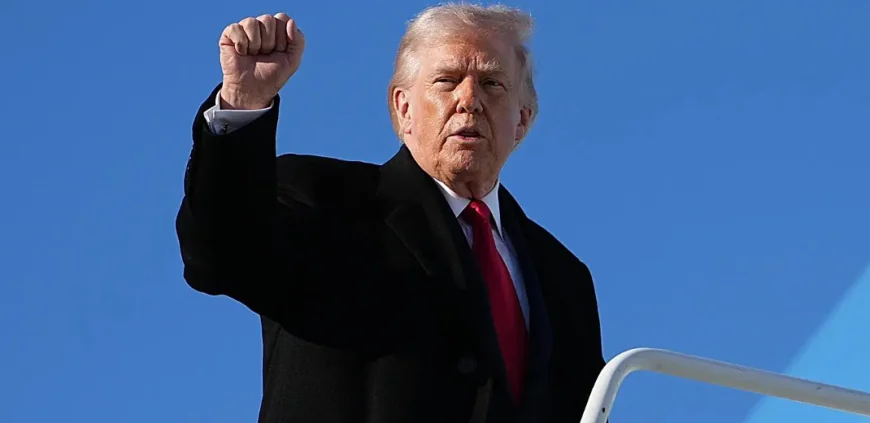
FORT BRAGG, UNITED STATES — President Donald Trump stated on Friday that a regime change in Iran would be "the best thing that could happen" as the U.S. administration evaluates potential military action against Tehran.
The remarks, reported by EuroNews, came shortly after Trump confirmed the deployment of a second aircraft carrier group to the Middle East. Speaking to troops at Fort Bragg, North Carolina, the President suggested that decades of clerical rule in Iran have failed to produce stability, adding that "they’ve been talking, talking, and talking for 47 years."
Deployment of USS Gerald R. Ford
Trump announced that the USS Gerald R. Ford, the world’s largest aircraft carrier, is being redirected from the Caribbean to join other U.S. naval assets in the Middle East. The President emphasized that this military buildup is a necessary contingency if diplomatic efforts fail. "If we can't make a deal, we're going to need it," Trump told reporters, adding that the vessel would depart "very shortly."
The deployment follows a visit to Washington by Israeli Prime Minister Benjamin Netanyahu. According to the Associated Press (AP), Netanyahu insisted during his meetings with Trump that any future agreement must effectively neutralize Iran’s ballistic missile development and end its support for proxy organizations such as Hamas and Hezbollah.
Diplomatic pressure and regional stability
While Trump has identified curbing Iran’s nuclear program as a primary goal, he hinted on Friday that this was only one of many concessions the U.S. expects. He described targeting the nuclear program as "the smallest of the missions" compared to broader regional objectives.


The President's explicit support for the potential ousting of Supreme Leader Ayatollah Ali Khamenei contrasts with more cautious notes struck recently by the administration. Secretary of State Marco Rubio previously noted that the Iranian regime is far more deeply entrenched than the Maduro administration in Venezuela, stating that any attempt at regime change would require "very careful thought" due to the long-standing nature of the current government in Tehran.
Internal and external challenges for Tehran
The heightened U.S. pressure comes at a time of significant internal stress for the Islamic Republic. Protests in Iran were met with a brutal crackdown last month, and the country is currently entering a 40-day mourning period for the thousands reported killed. This domestic unrest, combined with heavy international sanctions, has intensified the pressure on the clerical leadership.
Despite Tehran’s insistence that its nuclear program is entirely peaceful, international experts warn that the country has reached a critical technical threshold. Before the conflict in June, Tehran had enriched uranium to 60% purity, a level that analysts describe as a short, technical step away from weapons-grade material. Gulf Arab nations have warned that any direct strike on Iranian assets could ignite a broader regional war, a scenario the U.S. deployment seeks to deter through "peace through strength."


What's Your Reaction?
 Like
0
Like
0
 Dislike
0
Dislike
0
 Love
0
Love
0
 Funny
0
Funny
0
 Wow
0
Wow
0
 Sad
0
Sad
0
 Angry
0
Angry
0

Editor | Wise News Press — Delivering accurate, timely global news with integrity, insight, and editorial responsibility.












Comments (0)