



Ukraine resumes US peace talks amid EU veto and Middle East crisis
Ukrainian President Volodymyr Zelenskyy announced the resumption of peace talks with the US as Kyiv faces a blocked EU loan and rising Middle East tensions.


By Yusuf İnan | Wise News Press
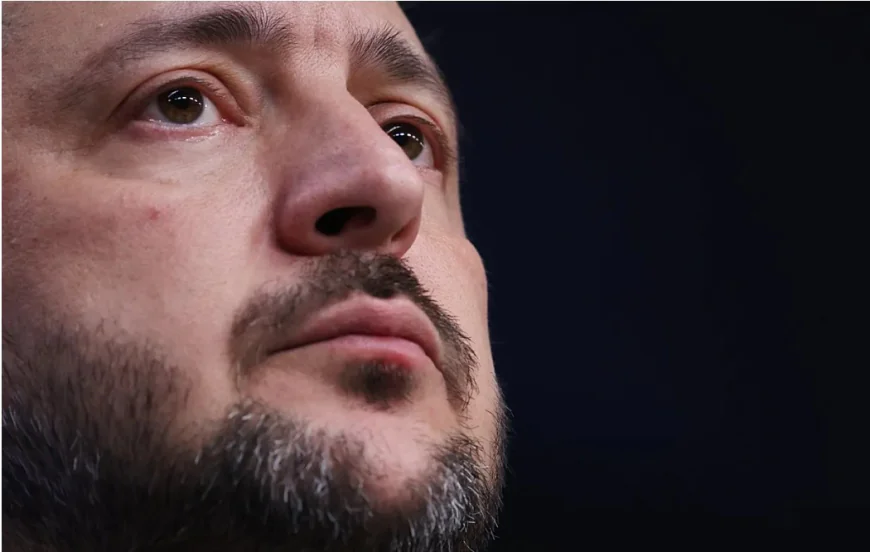
KYIV, UKRAINE — Ukrainian President Volodymyr Zelenskyy announced that a state delegation will travel to the United States to gradually resume diplomatic efforts to end the war, navigating a complex landscape of stalled European Union aid and shifting global priorities.
The strategic move comes at a highly critical juncture for Kyiv. Ukraine faces the unprecedented risk of losing essential EU financial support due to a persistent veto, while Moscow reportedly capitalizes on loosened US sanctions and surging energy prices triggered by the escalating conflict in the Middle East.
Time to resume the diplomatic process
According to an AP report, President Zelenskyy addressed the nation on Thursday, confirming that diplomatic channels are reopening. Pointing to the recent stagnation in negotiations, Zelenskyy stated, "There was a pause in the talks, and now it is time to resume."
Although numerous European leaders have warned against allowing the ongoing conflict in Iran to overshadow the war in Ukraine, continuous US-Israel strikes and the resulting regional escalation effectively brought Ukraine's diplomatic process to a standstill. As global energy prices rise due to disruptions in the Strait of Hormuz, Washington's decision to ease certain sanctions has left Moscow with even less incentive to accept bitterly negotiated compromises.
Addressing EU leaders on Thursday, the Ukrainian President highlighted that this easing has injected significant funds directly into Russian President Vladimir Putin's war budget. Many leaders across the bloc have criticized US President Donald Trump's decision to lift sanctions on Russian oil, arguing that the move actively fuels Moscow's war efforts against Ukraine.


Veto crisis and stalled EU support
Despite the criticism of external policies, the European Union has struggled to reach a consensus on imposing new punitive measures. A proposed 20th sanctions package against Russia remains suspended due to an ongoing dispute between Kyiv, Hungary, and Slovakia over the Druzhba oil pipeline.
Simultaneously, Budapest continues to block a critical €90 billion loan to Ukraine, funds that Zelenskyy has desperately described as "a critical resource to protect lives." Assessing the perilous financial situation, the President noted:
"We in Ukraine hope that Europe will find a way out of the difficult, very difficult situation we are all currently facing, especially when it comes to the destabilization of Europe's support for Ukraine. We have ensured that Russia does not feel stronger during this war. The aggressor must be weakened, and this is the key to ending the war."


Moscow monitors the shifting focus
While Zelenskyy signaled to EU leaders that Washington has shown a willingness to restart negotiations in recent days, he raised concerns about Russia's approach to the table. "It is up to all of us to ensure that the Russians do not come to these talks with the feeling that their position has become much stronger. This is not solely due to the situation with Iran driving up global oil prices," he warned.
However, signals from Moscow indicate the exact opposite sentiment. Kremlin spokesman Dmitry Peskov suggested that the pause in negotiations could end only after all parties, especially the United States, coordinate their schedules. Claiming that Washington is currently heavily preoccupied with the Middle East, Peskov stated:
"As soon as the schedules of all three parties are agreed upon, especially when our American mediators can pay more attention to Ukrainian affairs, we hope this pause will end, and we can hold the next round of trilateral talks."
Exporting anti-drone expertise to the Middle East
With EU financial support and accession processes stalled by vetoes, Kyiv appears to have found new strategic partners and potential revenue streams. As the conflict involving the US, Israel, and Iran intensifies in the Gulf region, several Middle Eastern countries have officially requested assistance from Ukraine, seeking to leverage Kyiv's hard-won expertise in countering Iranian-designed Shahed drones.
Zelenskyy revealed that 11 countries have requested assistance, with more than 200 Ukrainian anti-drone military experts currently deployed in the Middle East and another 34 personnel "ready for duty."
"These are military specialists who know how to help and how to defend against Shahed drones," Zelenskyy explained. "Our teams are already in the Emirates, Qatar, Saudi Arabia, and on their way to Kuwait. There are specific ways they can support our country and our defense, primarily through air defense."
Industry experts anticipate that Ukrainian drone manufacturers hope to secure lucrative deals to sell their defense products in the Middle East. Such exports would provide a vital boost to Ukraine's defense industry and broader economy, particularly as the nation faces a severe financial deficit approaching late spring that only the blocked €90 billion loan could fully cover.
What's Your Reaction?
 Like
0
Like
0
 Dislike
0
Dislike
0
 Love
0
Love
0
 Funny
0
Funny
0
 Wow
0
Wow
0
 Sad
0
Sad
0
 Angry
0
Angry
0

Editor | Wise News Press — Delivering accurate, timely global news with integrity, insight, and editorial responsibility.











Comments (0)