



EU leaders slam Orban over Ukraine loan veto: No blackmail
European Union leaders fiercely condemned Hungarian PM Viktor Orban's veto of a €90 billion loan to Ukraine, declaring they will not yield to blackmail.



By Ahmet Taş | Wise News Press
BRUSSELS, BELGIUM — European Union leaders have fiercely condemned Hungarian Prime Minister Viktor Orban’s controversial decision to veto a massive €90 billion loan package for Ukraine, declaring with absolute certainty that the 27-member bloc will not submit to political blackmail.
The unprecedented diplomatic backlash occurred during a highly tense summit in Brussels, where top European officials openly criticized Orban for leveraging existential financial aid to extract regional concessions ahead of Hungary's highly contested national elections. This steadfast blockade threatens Kyiv's economic and military stability at a critical juncture, particularly as Europe is now forced to shoulder the entire burden of the war effort following the total cessation of United States foreign and military assistance under the Donald Trump administration.
"No one can blackmail the EU"
According to EuroNews, leaders took the floor one by one at Thursday's summit to denounce Orban's behavior in the harshest terms yet seen within the European Council chambers. The chorus of condemnation was led by European Council President Antonio Costa, whose political authority and ability to maintain European unity are being directly tested by the ongoing Hungarian deadlock.
Speaking to reporters at the end of the grueling summit, Costa reminded the member states that diplomatic agreements must be honored, emphasizing that the integrity of the European institutions is currently at stake.
"Leaders took the floor to condemn Viktor Orban’s attitude and reminded him that a deal is a deal, and all leaders must keep their word," Costa said. "No one can blackmail the European Council. No one can blackmail the institutions of the European Union."


European Commission President Ursula von der Leyen also expressed her deep frustration over the blocked financial aid package. She emphasized that the life-saving loan is stalled simply because one leader failed to keep his promise made in December. However, von der Leyen firmly reaffirmed her commitment to delivering the necessary funds to Kyiv through alternative legal mechanisms if the veto persists.
Widespread condemnation from member states
The frustration echoed loudly across the bloc's top leadership, revealing deep fractures. German Chancellor Friedrich Merz accused Orban of committing a "serious act of disloyalty" that must be prevented in the future. Merz even suggested that the European Union's unanimous voting rules might need to be permanently altered to bypass such paralyzing vetoes in times of continental crisis.
French President Emmanuel Macron warned against the weaponization of energy security, urging immediate compliance with the December agreement. Meanwhile, Swedish Prime Minister Ulf Kristersson, Austrian Chancellor Christian Stocker, and Belgian Prime Minister Bart De Wever accused Orban of maliciously exploiting the dispute with Kyiv to fuel his increasingly aggressive reelection campaign at home.


EU High Representative Kaja Kallas went a step further, openly questioning the rationality of Hungary's arguments and noting that election periods often drive politicians away from rational policymaking and into the realm of populist grandstanding.
The Druzhba pipeline dispute
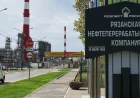
At the absolute center of the current diplomatic dispute is the transit of Russian oil through the Soviet-era Druzhba pipeline, which runs directly across Ukrainian territory. Orban insists that the Ukrainian government deliberately sabotaged the pipeline to trigger an energy crisis in Hungary right before the tight April 12 elections. Ukrainian President Volodymyr Zelenskyy has vehemently dismissed the accusation as baseless, publicly criticizing Orban's rhetoric and denying any intentional disruption.
Costa attempted to mediate the narrative, noting that Ukraine had cooperatively allowed an EU-led inspection mission regarding the pipeline's repair. He also pointed out the physical impossibility of Hungary's demands, recalling that Russia has deliberately targeted the Ukrainian pipeline infrastructure with missiles and explosive drones more than twenty times since the invasion began in 2022. Because of these Russian attacks, Costa argued, transit security is nearly impossible for Kyiv to guarantee.
Election politics and regime change claims
Despite the intense diplomatic pressure exerted during the roundtable session, Orban defiantly doubled down on his veto. As he departed the summit, the Hungarian leader escalated the rhetorical conflict by accusing Brussels of actively interfering in his country's domestic politics to orchestrate his downfall.
"European institutions, including sections of the Commission and the European Parliament, want a regime change in Hungary and are financing it," Orban claimed to the press.
As the election campaign enters its final, crucial weeks, Orban, who polls suggest is trailing behind his rising political rival Peter Magyar, is allegedly attempting to portray Magyar as a puppet of Brussels. By declaring that no European money will go to Ukraine until the Russian oil flows again, Orban aims to consolidate his nationalist voter base under the guise of defending Hungarian national sovereignty.
Critical threshold for Ukraine's economy
Hungary's veto comes at a uniquely perilous time for the European continent. With the US having completely cut off all foreign aid to Ukraine, the massive financial and logistical burden of sustaining the Ukrainian state has fallen entirely on European shoulders. The €90 billion loan forms the absolute backbone of Ukraine’s 2026 and 2027 state budgets, covering everything from civil servant salaries to basic infrastructure maintenance.
Initially scheduled for an early April payout to prevent state collapse, the delay threatens Kyiv's ability to balance its budget, posing severe and immediate risks on the frontlines. With Slovak Prime Minister Robert Fico also hinting at maintaining the blockade unless the pipeline infrastructure is fully repaired to secure his own nation's energy supply, Brussels faces a highly complex challenge. The bloc must urgently find a way to balance the immediate energy security needs of its landlocked member states with the absolute survival of Ukraine.
What's Your Reaction?
 Like
0
Like
0
 Dislike
0
Dislike
0
 Love
0
Love
0
 Funny
0
Funny
0
 Wow
0
Wow
0
 Sad
0
Sad
0
 Angry
0
Angry
0

Editor | Wise News Press — Delivering accurate, timely global news with integrity, insight, and editorial responsibility.
















Comments (0)