



On World Children's Day, Melania Trump should raise a flag for peace
In a World Children's Day opinion, Yusuf İnan urges Melania Trump and leaders' spouses to turn a local humanitarian truce into wider efforts for peace.


By Yusuf İnan | Wise News Press
Journalist and author | Political and strategic analyst
On World Children's Day, I ask Melania Trump and the spouses of other world leaders to turn a rare humanitarian pause in Ukraine into a sustained campaign for peace and the protection of children.
A temporary ceasefire can let food enter a town and families leave it. Its greater promise lies in what leaders choose to do next. For children growing up amid war, peace cannot remain a message delivered once a year; it has to become a series of decisions that keeps them alive and gives them a future.
Children need peace beyond a day of recognition
World Children's Day asks us to consider children's rights. It also asks an uncomfortable question: what does that promise mean to a child who goes to sleep fearing the next strike?
In Ukraine, UNICEF reported that at least 1,144 children were killed or injured during the first ten months of 2026. Behind that number are families whose lives cannot be restored by a speech. Children in Gaza and other places affected by conflict face their own losses, fear and displacement. Their circumstances differ, but none should have to prove that their suffering deserves attention.
War follows children long after the immediate danger passes. A child who survives an attack may still lose a parent, a home, a school or the confidence that tomorrow will be safe. Some families flee across borders; others cannot leave at all. If we mark this day while accepting those conditions as inevitable, we have missed its purpose.
Mercy must reach children through human hands
The Islamic scholar Bediüzzaman Said Nursi reflected on the care given to the most vulnerable living beings. In The Words, he points to fish and creatures sheltered within fruit, then to infants and newborn animals, as examples of the weak receiving nourishment despite their inability to provide for themselves. For him, this was a sign of divine mercy.
I return to that reflection when I think of children in war. If mercy is so closely associated with the vulnerable, what responsibility falls on those of us who can act? A child trapped without food or shelter needs more than our conviction that mercy exists. That child needs someone to open a route for aid, negotiate a pause in fighting, arrange transport and keep the route safe.
I believe faith should sharpen that responsibility. The question is not which child deserves compassion. It is whether governments and influential people will use the means available to them before another child dies waiting.
What the Oleshky pause made possible
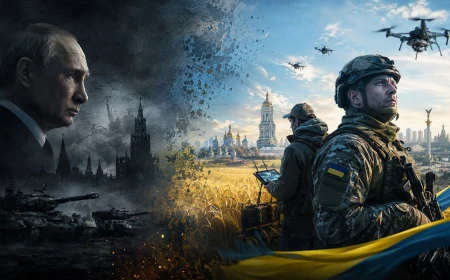
The humanitarian operation in Oleshky, in Ukraine's Kherson region, offers a concrete reason for this appeal. The White House said Melania Trump helped bring about a localized ceasefire so aid could enter and civilians could evacuate. Ukraine's human rights ombudsman also credited her involvement in coordinating the mission and reported that residents reached safety.
That pause did not end the war. It did, however, show what can happen when people with access to opposing sides concentrate on a limited, urgent goal. Negotiators had to agree on practical details. Aid had to move. Civilians had to be given a chance to leave. Those steps mattered more to the people at risk than any ceremony held afterward.
Mrs. Trump, you have already helped make a humanitarian opening possible. My appeal is that you continue. Ask what can be done for the next community cut off from food or medicine, for the next group of children separated from their families, and for civilians who need a safe way out. Let the experience of Oleshky become a reason for sustained work, not an isolated exception.
A verse about former enemies
In a 2019 press conference in Ankara, Russian President Vladimir Putin invoked the part of a Quranic verse that recalls enemies whose hearts were brought together. The complete verse, Quran 3:103, says in my English rendering:
Hold fast, all of you, to God's bond, and do not divide. Remember God's grace to you: you were enemies, but He brought your hearts together, and through His grace you became brothers. You stood at the edge of a pit of fire, and He rescued you from it. In this way God makes His signs clear to you, so that you may find the right path.
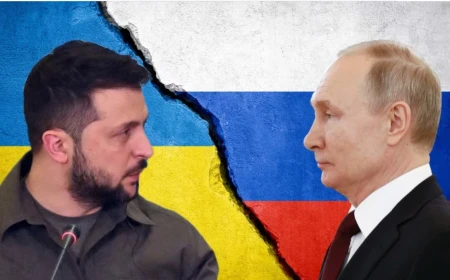
Those words should be read alongside what war does to real families. President Putin has spoken of reconciliation. I ask him to consider what that principle demands now of a leader with the power to stop attacks, permit humanitarian access and pursue an end to Russia's war against Ukraine.
Quoting a verse does not itself protect a child. The moral weight of the words lies in the choices that follow them.
Mothers can press leaders to listen
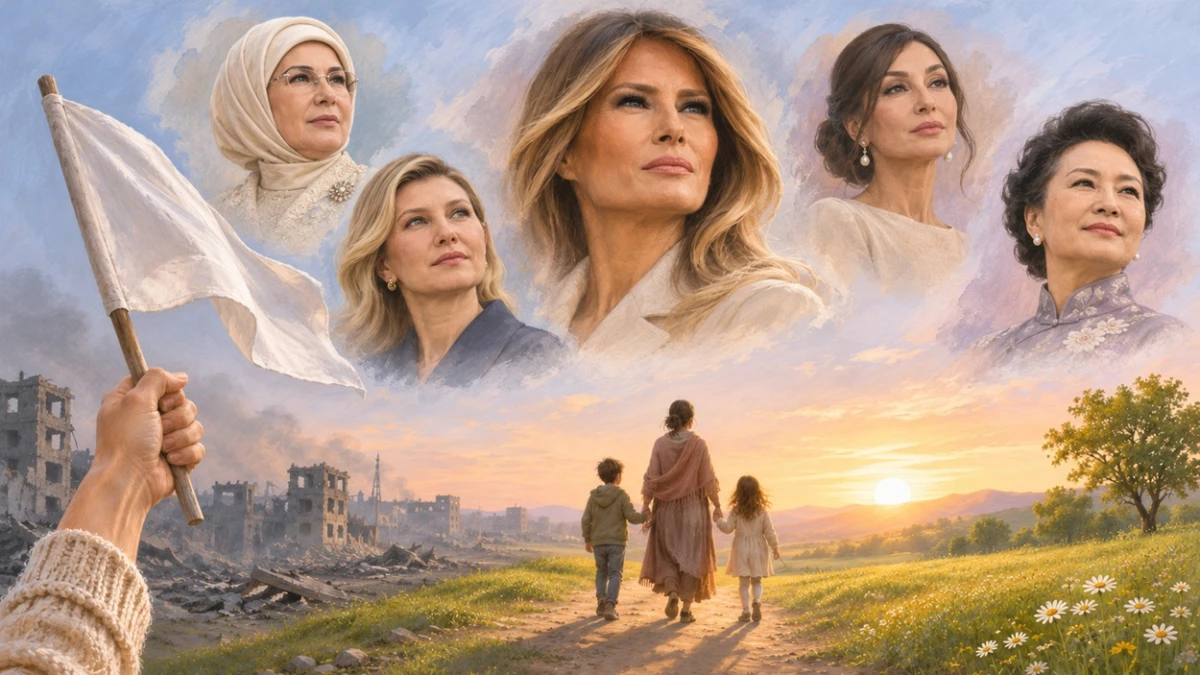
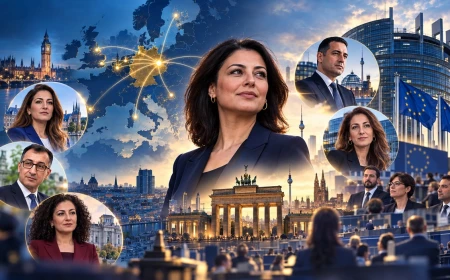
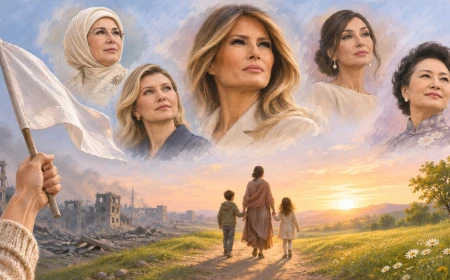
Melania Trump need not make this appeal alone. Emine Erdoğan, Olena Zelenska, Mehriban Aliyeva and Peng Liyuan have different positions, countries and audiences. I am asking them to use their public voices for a shared humanitarian aim: protect children, support family reunification, expand aid access and keep channels for dialogue open.
Such a call would not replace negotiations by governments or the rights of people whose countries are at war. It could insist that children's lives remain present in every negotiation. The spouses of leaders can ask questions that should never disappear beneath arguments about territory, influence and military advantage: Who is still trapped? Which families are separated? What agreement would let aid reach them this week?
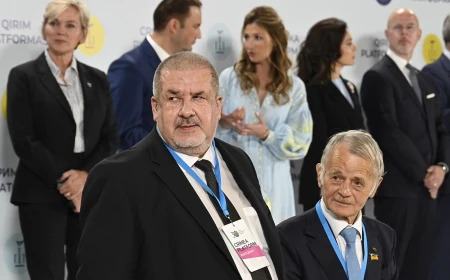
As editor-in-chief of Şehitler Ölmez, I was once asked by fellow journalists about an image bringing together mothers from opposing sides of violence in Türkiye. My response was simple: “If the mothers have forgiven, who is left to object?” I remain its editor-in-chief, and I still believe mothers' calls for peace deserve to be heard. Their compassion cannot settle every political dispute, but it can challenge leaders to account for the human cost of delaying peace.
Raise a white flag for the children
Mrs. Trump, I ask you to raise a white flag for peace on behalf of children caught in war. It would be a public commitment to keep working after the photograph is taken: to seek humanitarian pauses where civilians are trapped, press for safe aid routes, help reunite families and encourage talks that can lead to lasting peace.
I ask the other women named here to join that effort in ways they can genuinely undertake. They need not stand together for a staged image. Their actions, taken separately or together, could keep attention on children when the world's attention moves elsewhere.
A white flag raised for children should lead to doors opening, vehicles reaching the people who need them and families living without fear of the sky. That is the peace I am asking leaders to work toward.
WiseNewsPress.com
What's Your Reaction?
 Like
0
 Dislike
0
 Love
0
 Funny
0
 Wow
0
 Sad
0
 Angry
0
Yusuf İnan is a journalist, columnist, strategic analyst and head of the Wise News Press Media Group. His work focuses on international affairs, geopolitics, security and major social issues. Through his journalism, he promotes peace, dialogue, mutual understanding and responsible reporting while contributing to the development of international media projects.









Comments (0)