



Countdown for Iran: Diplomacy or Military Operation in Geneva?
US and Iranian delegations meet in Geneva for Oman-mediated talks as the Trump administration ramps up military buildup in the Middle East.


By Ahmet Taş | Wise News Press
GENEVA, SWITZERLAND — United States and Iranian delegations are set to meet in Geneva on Thursday for Oman-mediated negotiations, a high-stakes encounter that many observers describe as the "last chance" for diplomacy before a potential military escalation.
The meeting comes at a time when the U.S. has significantly increased its military presence in the Middle East, deploying advanced fighter jets and carrier strike groups to the region. As the clock ticks, political and military circles are shifting the debate from whether a military operation will occur to what its specific scope and objectives might be, with some labeling this moment the most critical "military countdown" in modern Middle Eastern history.
Trump’s Warnings and the Nuclear Threshold
The diplomatic tension follows U.S. President Donald Trump’s "State of the Union" address, where he reiterated that Tehran would never be allowed to possess nuclear weapons. While expressing a preference for a diplomatic solution, the President maintained a sharp tone, alleging that Iran is developing missiles capable of reaching Europe and soon the American mainland.
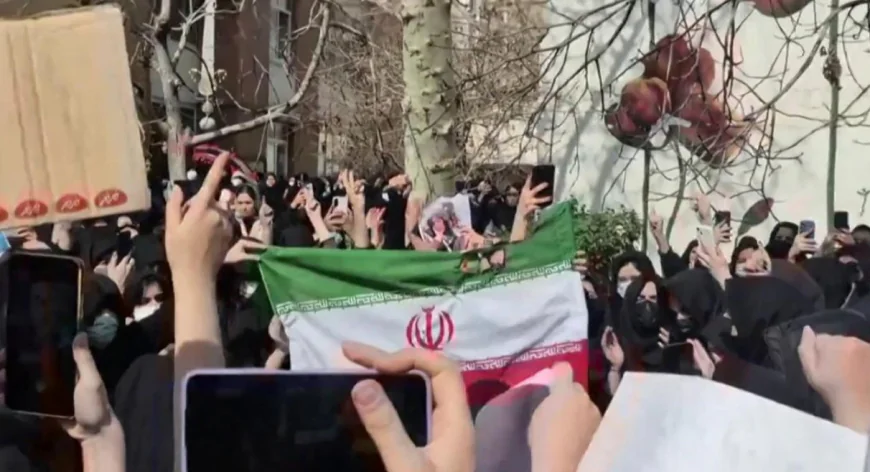
"They were warned not to restart their nuclear program, but they are continuing. They are starting anew," Trump stated. This rhetoric is underscored by reports from December detailing mass protests in Iran, where casualties among demonstrators have drawn international condemnation and further hardened the U.S. stance.
Operation Scenarios: Limited Strikes vs. Regime Change
Leaked reports from the Trump administration suggest two primary military paths if negotiations fail. According to the Wall Street Journal, one plan involves "limited military operations" designed solely to increase pressure on Tehran to accept nuclear demands without triggering a full-scale war. However, a more aggressive scenario gaining traction involves targeted strikes on state institutions aimed at weakening or toppling the current government.


Menashe Amir, an expert on Iranian affairs based in Israel, suggests that the goal of regime change is becoming more prominent in Washington. "Trump has concluded that the Middle East will never achieve stability without the end of the current regime in Tehran," Amir told reporters. Despite this, he noted that even the President might not yet have a "final answer" on the ultimate end-state of an armed conflict.
Risks of Uncontrolled Escalation
Strategic analyst Damon Golriz of the Hague Institute for Geopolitics warned that even a "limited" strike carries the risk of spiraling out of control. Golriz argues that a regime facing existential threats will act on pure survival instincts, potentially utilizing its proxy forces across the region to trigger a chain reaction of violence.
Golriz also pointed to recent warnings from former CIA Director David Petraeus, who noted that even a comprehensive military operation might only have a limited impact on the regime's stability and is unlikely to result in a successful transition to a new government.


The 'China Shift' and Regional Realities
Kamran Matin, an International Relations expert at the University of Sussex, believes Trump may still be seeking a compromise due to the lack of a clear "exit strategy." Matin highlighted the U.S. National Security Strategy released in November, which signals the end of the "nation-building" era and a shift in focus from the Middle East toward competition with China.
"Unless a clear political alternative is found, the U.S. may find that reaching an agreement with the existing regime is a more viable option than an open conflict with unpredictable results," Matin explained. Furthermore, the internal resilience of the Tehran regime—which has remained intact despite the deaths of over 30,000 protesters since December—suggests that a transition to a secular democracy is still a distant prospect. Instead, experts warn that a state collapse could lead to authoritarian military rule or prolonged regional warfare.
Pressure from Israel
While Washington weighs its options, Israeli Prime Minister Benjamin Netanyahu continues to advocate for a "harsh response." Addressing the Israeli parliament on February 23, Netanyahu warned the "Ayatollah regime" that any attack on Israel would be met with "unimaginable force."
Experts like Menashe Amir believe Israel’s influence is a major factor in the current U.S. buildup, as Jerusalem has consistently argued that regional issues can only be solved by removing the current Iranian leadership. As delegations sit down in Geneva under Oman's mediation, the world waits to see if the "Oman channel" can bridge the gap or if the Middle East is truly on the brink of another major conflict.
What's Your Reaction?
 Like
0
Like
0
 Dislike
0
Dislike
0
 Love
0
Love
0
 Funny
0
Funny
0
 Wow
0
Wow
0
 Sad
0
Sad
0
 Angry
0
Angry
0

Editor | Wise News Press — Delivering accurate, timely global news with integrity, insight, and editorial responsibility.


















Comments (0)