



EU plans total blockade on Russian oil despite G7 hurdles
The EU moves toward a total ban on services for Russian oil tankers, potentially scrapping the G7 price cap as the 20th sanctions package nears.


By Ahmet Taş | Wise News Press
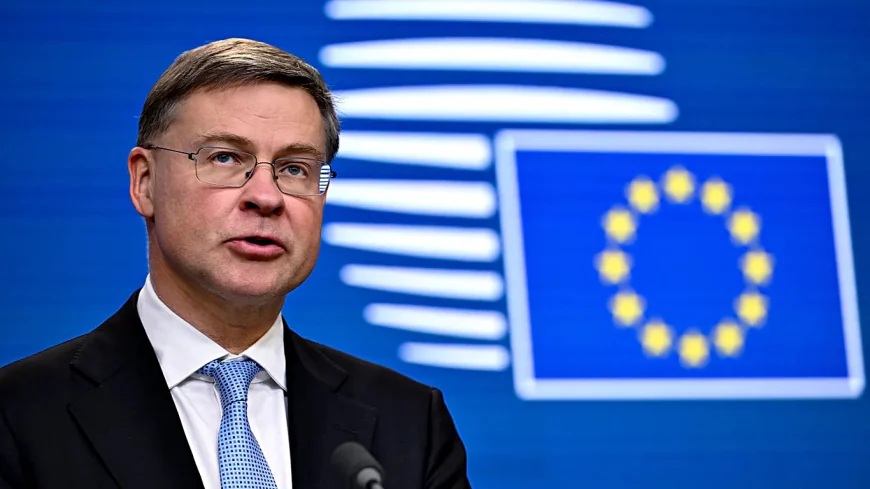
BRUSSELS, BELGIUM — The European Union is preparing to launch a total blockade on maritime services for Russian oil tankers ahead of the fourth anniversary of the Ukraine invasion on 24 February, signaling a major escalation in its economic warfare against Moscow. European Commission Executive Vice-President Valdis Dombrovskis announced on Tuesday that the bloc is ready to act independently if a broader consensus within the G7 cannot be reached.
The proposed measure would effectively dismantle the "price cap" mechanism that has been in place since December 2022. Currently, the cap—most recently set at $44.10 per barrel—allows EU and G7 companies to provide insurance and shipping services to tankers carrying Russian oil only if it is sold below the limit. The new 20th sanctions package aims to ban these services entirely, regardless of the oil's sale price.
Moving beyond the G7 price cap
During a briefing in Brussels, Vice-President Dombrovskis emphasized that while coordination with G7 allies (the US, UK, France, Germany, Italy, Japan, and Canada) remains a priority, it is no longer a prerequisite for EU action.
"The higher the level of alignment we achieve at the G7 level, the better. However, if a broad agreement cannot be reached, we will not hold back from taking steps at the EU level," Dombrovskis said. This shift reflects growing frustration in Brussels over the limited impact of the current cap and the emergence of alternative shipping routes that bypass Western oversight.
Concerns over the ‘shadow fleet’
The proposal has met internal resistance, particularly from Greece, which maintains a powerful global shipping industry. Athens officials expressed concerns that a total ban might inadvertently strengthen Russia’s "shadow fleet"—a network of aging, uninsured tankers that operate outside Western jurisdictions.


Greek maritime representatives argue that the ban could drive business toward competitors in China and India while encouraging deceptive practices, such as removing vessels from national registries to evade detection. Despite these concerns, the Commission appears determined to close the loopholes that have allowed Russian energy revenues to stabilize.
Targeting sanctions evasion in Kyrgyzstan
A groundbreaking element of the 20th package is the proposed activation of the "Anti-Circumvention Tool" for the first time, specifically targeting Kyrgyzstan. Trade data suggests that the Central Asian nation has become a major "back door" for European goods flowing into Russia.
The statistics cited by Brussels are stark:


-
2021: EU exports to Kyrgyzstan totaled 263 million Euro.
-
2024: EU exports to Kyrgyzstan surged to 2.5 billion Euro.
EU officials suspect that industrial machinery and radio equipment sold to Kyrgyzstan are being re-exported to Russia for use in military hardware on the Ukrainian front. EU Sanctions Envoy David O’Sullivan is expected to travel to Bishkek in the coming days to investigate the surge in trade directly with Kyrgyz authorities.
Zelensky demands nuclear sanctions
As the war enters its fifth year, Ukrainian President Volodymyr Zelensky has renewed his call for the West to target Russia's nuclear energy sector. In a forceful address on Monday, Zelensky condemned Moscow’s disregard for international norms and democratic values.
"You have no respect for the US, the rules, or democracy. Get out of Russia; go home," Zelensky told Russian officials in his speech, while urging the EU to include Rosatom in future restriction lists.
To show continued support, European Commission President Ursula von der Leyen and European Council President António Costa are scheduled to visit Kyiv on 24 February to mark the anniversary of the invasion.
What's Your Reaction?
 Like
0
Like
0
 Dislike
0
Dislike
0
 Love
0
Love
0
 Funny
0
Funny
0
 Wow
0
Wow
0
 Sad
0
Sad
0
 Angry
0
Angry
0

Editor | Wise News Press — Delivering accurate, timely global news with integrity, insight, and editorial responsibility.















Comments (0)