



EU shifts toward 'coalition of the willing' to bypass vetoes
The European Union is increasingly utilizing legal loopholes and "enhanced cooperation" to circumvent vetoes from Hungary and Slovakia on critical Ukraine funding.
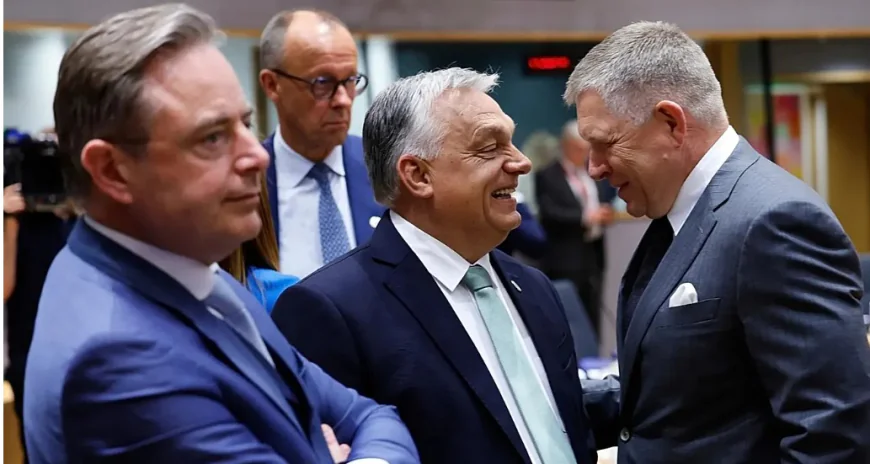


WISE NEWS PRESS / BRUSSELS, BELGIUM — DECEMBER 23, 2025
The European Union has entered a transformative era in its decision-making process, increasingly opting for a "coalition of the willing" model to overcome persistent vetoes from member states like Hungary and Slovakia.
During a landmark summit earlier this month, EU leaders bypassed the traditional requirement for unanimity by employing a collective borrowing mechanism based on the shared budget. This maneuver successfully secured 90 billion euros in aid for Ukraine for 2026 and 2027, effectively sidelining objections from Budapest, Prague, and Bratislava. Analysts suggest this move marks a significant departure from the bloc’s historically rigid consensus rules.
Navigating legal loopholes in Brussels
To advance with 24 member states while excluding dissenters, the EU relied on the "enhanced cooperation" principle enshrined in the treaties. Furthermore, Brussles has increasingly utilized Article 122—originally intended for "serious economic crises"—to unlock frozen Russian assets through qualified majority voting. While effective, Dániel Hegedűs of the German Marshall Fund warned that "this strategy is not entirely secure, either legally or politically."
The "Hungary problem" and creative policy design
Data compiled by Michal Ovádek from University College London reveals that since 2011, Hungary has been responsible for 19 out of 46 total vetoes used within the bloc. To counter this, the European Commission is now consciously designing proposals to fall under qualified majority voting rather than unanimity.
A prominent example is the REPowerEU roadmap. Although Hungary and Slovakia opposed the plan to phase out Russian fossil fuels by 2027, the regulation was passed by categorizing it under trade or internal market competencies, thereby neutralizing the veto power of opposing states.


Risks of a multi-speed Europe
This shift toward "pragmatic federalism," a term used by former ECB President Mario Draghi, suggests a multi-speed EU where members progress at different rates. However, international law expert Tamás Lattmann cautions that bypassing the veto—often seen as a small nation's final line of defense—could lead to a loss of institutional legitimacy and trigger protracted legal battles at the European Court of Justice.


What's Your Reaction?
 Like
0
Like
0
 Dislike
0
Dislike
0
 Love
0
Love
0
 Funny
0
Funny
0
 Wow
0
Wow
0
 Sad
0
Sad
0
 Angry
0
Angry
0

Editor | Wise News Press — Delivering accurate, timely global news with integrity, insight, and editorial responsibility.





















Comments (0)