



Iran war day 7: US-Israeli bombardment continues as casualties mount
As the conflict enters its seventh day, over 1,200 have died in Iran and 330,000 are displaced while Azerbaijan withdraws diplomats and flight bans extend to March 9.



By Ahmet Taş | Wise News Press
TEHRAN, IRAN — The conflict in Iran entered its seventh day on Friday, with United States and Israeli forces maintaining a massive aerial bombardment of military infrastructure as the reported humanitarian toll exceeded 1,200 dead in Iran and hundreds of thousands displaced across the region.
The war, which escalated rapidly following the initial strikes on February 28, has now triggered a severe diplomatic rift between Azerbaijan and Iran, forced the suspension of major international flight routes through March 9, and prompted retaliatory Iranian missile strikes against neighboring Gulf states hosting American military installations. As the smoke clears over the Iranian capital, the geopolitical map of the Middle East is being reshaped by the hour.
Humanitarian crisis: 330,000 displaced in seven days
The United Nations High Commissioner for Refugees (UNHCR) issued a somber report on Friday, stating that the bombardment has displaced more than 330,000 people within Iran. According to the agency, the vast majority of these individuals are fleeing toward perceived safe zones within their own borders rather than attempting mass crossings into neighboring states.
Local estimates suggest that in the first 48 hours of the violence alone, approximately 100,000 residents abandoned the capital city of Tehran to escape the persistent air strikes. While the UNHCR noted that there has not yet been a mass exodus into neighboring countries, international aid agencies are keeping emergency relief capacities on standby should the borders begin to swell with refugees.
The humanitarian impact is not confined to Iran. In Lebanon, which has become a secondary front for Israeli operations, the government reports that over 84,000 people are currently living in approximately 400 temporary shelters. Furthermore, the UNHCR recorded over 30,000 people crossing from Lebanon into Syria since the start of the week; while most are returning Syrian nationals, the figure includes a significant number of Lebanese citizens fleeing the escalating violence.


Azerbaijan withdraws diplomats following drone strikes
Diplomatic relations between Baku and Tehran reached a breaking point on Friday following drone strikes on Azerbaijani territory. Azerbaijani Foreign Minister Jeyhun Bayramov announced during a press conference in Baku that President Ilham Aliyev has ordered the immediate withdrawal of all diplomatic staff from the embassy in Tehran and the consulate general in Tabriz.
"We cannot put the lives of our people at risk," Bayramov stated, confirming that personnel have already begun returning home. The move follows an incident on Thursday where Iranian-made drones reportedly violated the border and fell in the Nakhchivan Autonomous Republic, injuring four civilians.
President Aliyev has threatened retaliation, and the Azerbaijani Ministry of Defense issued a strong condemnation of the strikes on civilian infrastructure. Although Iran has officially denied responsibility for the Nakhchivan incident, Baku maintains that military preparations for "retaliatory measures" are underway.


Aviation halt: Regional flight bans extended to March 9
The safety of regional airspace remains a critical concern, leading to a significant extension of flight suspensions. Turkish Transport Minister Abdulkadir Uraloğlu announced that all flights to Iran, Iraq, Syria, Lebanon, and Jordan have been halted until at least March 9.
Carriers including Turkish Airlines (THY), AJet, Pegasus, and SunExpress have removed these destinations from their immediate schedules. In a more long-term move, Pegasus has canceled Iran flights until March 12, while THY has cleared its schedule of Iranian routes until March 20.
According to Minister Uraloğlu, several Iraqi Airways aircraft remain grounded at Istanbul, Ankara, and Dalaman airports. Conversely, two Turkish passenger planes—one belonging to THY and one to Pegasus—remain grounded at Tehran’s Imam Khomeini International Airport, while a chartered Tailwind Airlines aircraft is stuck in Iraq. Following the drone strikes in Nakhchivan, Azerbaijan Airlines flights were diverted to Iğdır, Turkey, where passengers were safely transported to their destination by land.
Military dynamics: Missile exchanges and naval strikes
The military toll of the first week is staggering. Iranian state sources report that over 1,200 people have been killed in the bombardment, while Israel’s Ministry of Health has confirmed 11 deaths within its borders. Over 1,600 people in Israel have been treated in hospitals for injuries ranging from rocket impacts to anxiety and accidents occurred while rushing to bomb shelters.
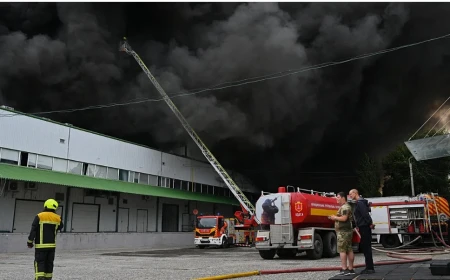
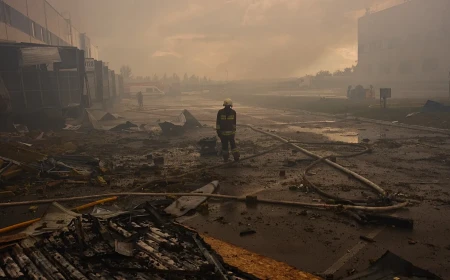
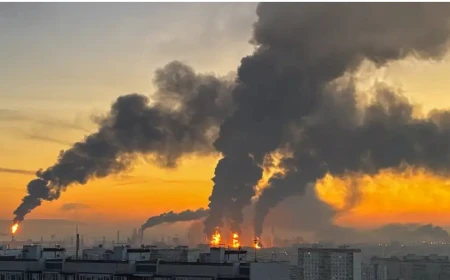
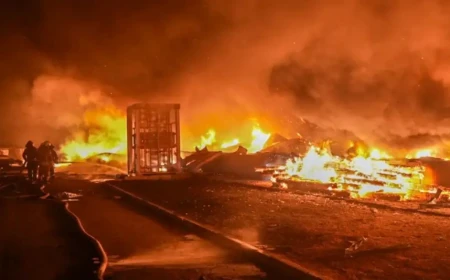
On the battlefield, Israel announced a "large-scale air operation" against Tehran early Friday morning, claiming to have destroyed a significant portion of Iran’s air defense systems and ballistic missile launchers. Witnesses in Tehran and Kermanshah reported massive explosions that shook residential buildings.
Simultaneously, the US Central Command (CENTCOM) confirmed a strike on the Iranian drone carrier IRIS Shahid Bagheri. The vessel, which features a 180-meter runway and was a centerpiece of Iran’s maritime drone capability, was seen burning in black-and-white footage released by CENTCOM.
Iran responded by launching ballistic missiles and drones at Gulf nations hosting US military bases, including Kuwait, Qatar, Saudi Arabia, and Bahrain. While Qatar’s Al Udeid Air Base and Saudi Arabia’s Prince Sultan Air Base successfully intercepted the incoming threats, the escalation has raised fears of a total regional collapse.
Leadership shift and international interference
Internal political stability in Iran is also under threat following the death of Supreme Leader Ali Khamenei. State television reported that the Assembly of Experts has begun meeting to determine a successor, with high-ranking officials including President Masoud Pezeshkian and Judiciary Head Gholam-Hossein Mohseni-Ejei in attendance. However, the process is being hampered by the ongoing war, as several buildings belonging to the Assembly of Experts were reportedly hit in recent air strikes.
On the international stage, Ukrainian President Volodymyr Zelenskyy revealed that the US has requested Ukraine's "special support" in defending against Iranian-made Shahed drones. Zelenskyy has instructed experts to provide the necessary tools and knowledge to allies, noting that Ukraine’s experience in combatting these drones is now a vital global asset.
Meanwhile, US President Donald Trump has offered vocal support for Kurdish armed groups in Iraq that may be planning a ground incursion into Iran. "I think it’s great that they want to do that. I would support it 100%," Trump told NBC News, while simultaneously dismissing Iranian warnings of a "disaster for occupiers" as "idle talk". Trump emphasized his desire to see a leadership change in Tehran, stating that he wants to "go in and clean everything up fast".
What's Your Reaction?
 Like
0
Like
0
 Dislike
0
Dislike
0
 Love
0
Love
0
 Funny
0
Funny
0
 Wow
0
Wow
0
 Sad
0
Sad
0
 Angry
0
Angry
0

Editor | Wise News Press — Delivering accurate, timely global news with integrity, insight, and editorial responsibility.














Comments (0)