



Putin’s Endgame: Exporting Fear to Europe Amidst a Geopolitical Collapse
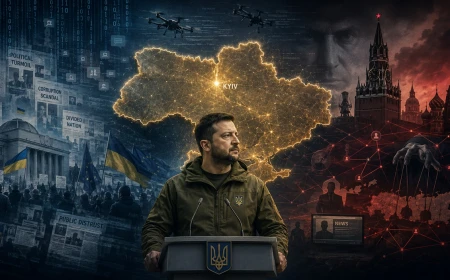
Stalled by Ukrainian resilience reminiscent of Gallipoli, Putin attempts to export fear to Europe. Meanwhile, Russia loses its grip on Central Asia to US influence.



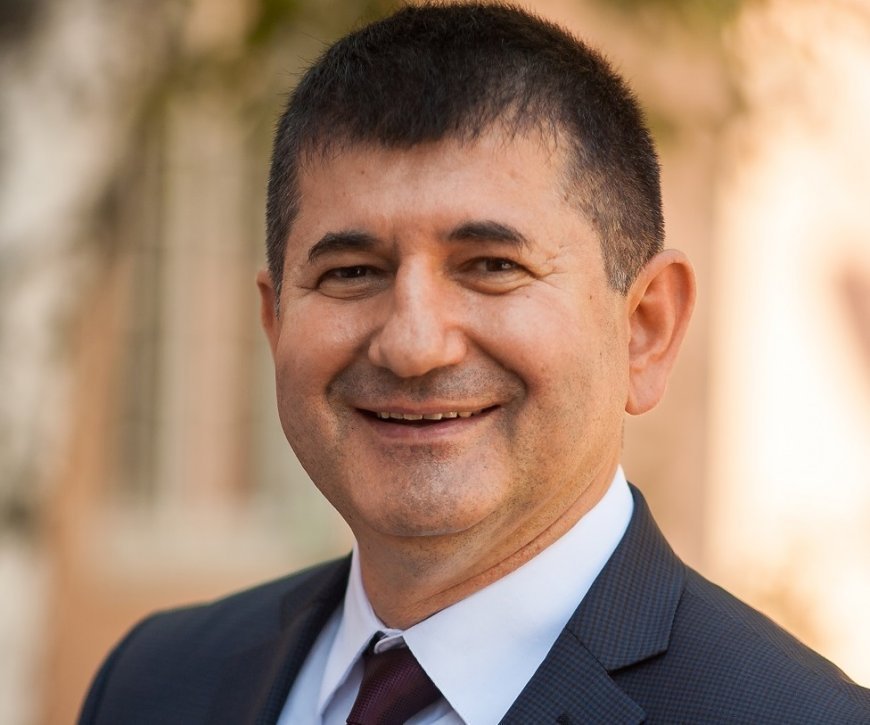
Yusuf İnan
Journalist | Opinion Writer
Wise News Press – Izmir, Türkiye
Putin’s Endgame: Exporting Fear to Europe Amidst a Geopolitical Collapse
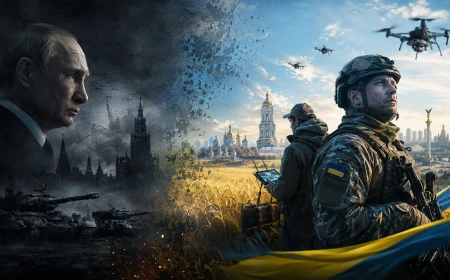
When we analyze Russia's strategic deadlock in the invasion of Ukraine and its failure on the ground, the fundamental cause is not a lack of military equipment or logistical errors. The real reason is a sociological and psychological rupture: The Ukrainian people have become accustomed to war and have conquered their fear.
The people of Ukraine have transcended the fear of war. They have adapted to living within the war, under the shadow of bombs. This is not merely a habit; it is a resistance that defies death. Even in regions where the war is most intense, where the front lines are hottest, people refused to abandon their homes. Civilians who turned down even the Ukrainian state's mandatory evacuation requests displayed a stance that will go down in history, saying, "If millions are to die, I will die in my home." They have made living with Russian missiles, sirens, and the fear of bombs a routine.
It was this resistance that truly halted Russia's massive war machine.


A Historical Déjà Vu: The Spirit of Gallipoli and Ukraine
This resistance, which challenges death itself, reminds us of a very familiar scene from historical memory. In recent history, the Turkish nation demonstrated exactly this spirit during the War of Independence and at Gallipoli (Çanakkale). Turkey defied death against the occupation of the seven great powers of that era. The order given by Mustafa Kemal Atatürk, the founder of the Republic of Turkey, to his soldiers—"I do not order you to attack, I order you to die"—was the pinnacle of this psychological superiority. Turkish soldiers did not think of returning when they went to the front.
Today, the Ukrainian people have captured this same horizon. Unable to break this mindset, Russia could not advance on Ukrainian soil and became stuck in a strategic quagmire.


Putin’s New Target: Europe’s Comfort Zone
Wanting to cover up this failure at the front, Putin has changed his strategy. His initial plan was to create internal turmoil within the Ukrainian state and people, thereby dividing the country from within. However, it seems this plan was insufficient for Russia. Unable to break the Ukrainian resistance on the ground, Putin has now turned his course to the West: Putin aims to use that "wall of fear"—which Ukraine has already surmounted—to now frighten Europe.
For the people of Europe, who are accustomed to comfort, who have not seen war for generations, and who live in a zone of safety, even the possibility of war spreading to their soil creates great anxiety. Putin must have discovered this soft underbelly of Europe. Moscow's current strategy is to influence Europe with this fear and emotion, hoping to create public pressure that stops aid to Ukraine.
Russia’s Desperation and the Suicide Scenario
However, this move by Putin reveals Russia's desperation rather than a show of strength. Russia wants to get out of the Ukrainian swamp it is stuck in, but it cannot take a step back because it has made it a matter of pride. Russia's rhetoric and implications about carrying the war to European soil are not realistic.
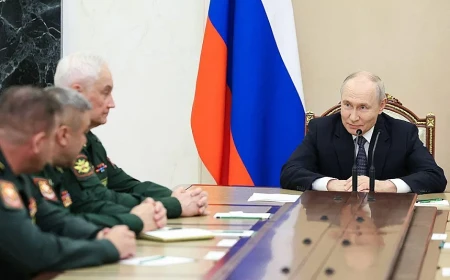
Carrying the war into Europe and NATO would tear Russia apart. This would be suicide for the Russian Federation. It is impossible for a strategist like Putin not to know this reality. Therefore, threats against Europe are not a strategic military plan, but a tactic of psychological warfare.
The most serious and rational strategy Putin could undertake would be a step to win Ukraine over to his side, not to expand the war. Russia has no physical need for Ukraine's land; before the war, the entirety of Ukrainian territory was already under Russia's influence and sphere of effect.
What Was Lost: Not Land, But a Nation
At this point, instead of dominating the whole of Ukraine, Russia has had to settle for occupying 10 percent of it. But the cost of this "gain" has been immense. It lost hundreds of thousands of people. It threw century-old Russian state strategies into the trash. Most importantly, it tarnished the title of "Superpower" and opened its military deterrence to debate.
Russia lost not only a military war but also a sociological one: It lost the Ukrainian people. Before the war, a significant portion of the Ukrainian people trusted Russia and Putin. They did not believe that Russia would invade Ukraine. There was a very serious population exchange and kinship ties between the two countries. Half of the families still live in Ukraine and half in Russia. However, with this invasion, Russia also lost its own subjects living in Ukraine, the ethnic Russian population. Ironically, Russian cultural traces in Ukraine were erased by Russia itself.
If the Moscow administration looks at this picture and still finds itself successful, it may continue on this path. But the end of this road is a precipice.
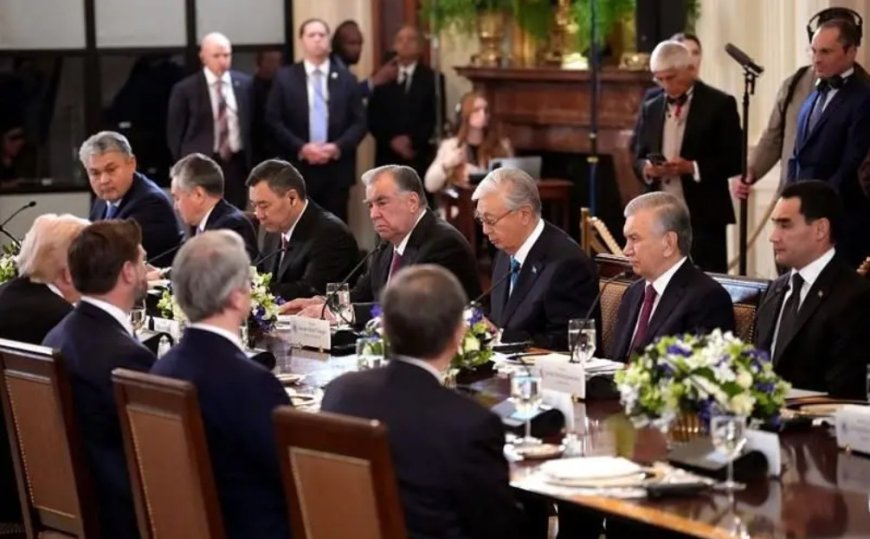
Leaders of Kazakhstan, Kyrgyzstan, Tajikistan, Turkmenistan and Uzbekistan at the White House
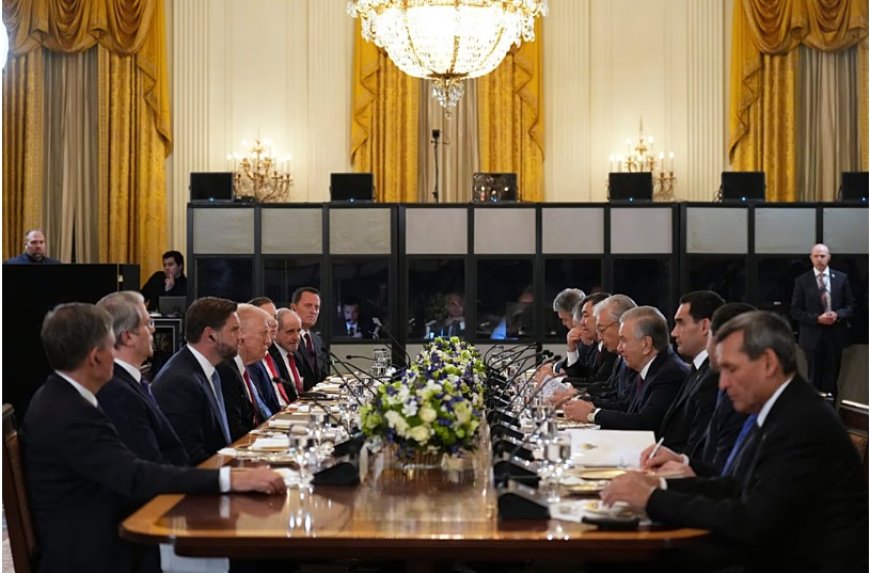
Trump and Central Asian leaders
The Summit in the Oval Office: Russia’s Crystal Has Cracked
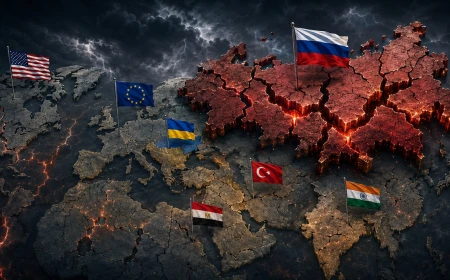
While Russia is grappling with this crisis on its western borders, a historic geopolitical earthquake is taking place in its backyard.
US President Donald Trump held bilateral meetings in the Oval Office with the leaders of Kazakhstan, Kyrgyzstan, Tajikistan, Turkmenistan, and Uzbekistan, followed by a working dinner. Despite Russia, the gathering of these five Asian heads of state—historically considered Russia's "backyard" and strongest allies—at the White House clearly demonstrates the dominance Russia has lost with the invasion of Ukraine.
With this move, Trump has cracked the crystal of the Russian Federation's sphere of influence. NATO and the Western alliance are no longer just in Europe; they are effectively in Asia, in the heart of Russia.
Conclusion: The Only Way Out
If Russia and Putin continue with this strategy, the result will be even more dire for Moscow. Trying to scare Europe or prolonging the war serves no purpose other than increasing the risk of Russia fracturing.
The only rational option for Russia and Putin is to withdraw from Ukraine, make a diplomatic move that will regain the hearts and trust of the Ukrainian people, and prevent this great rupture in the region. Otherwise, it will become impossible to draw the countries of the region back into its own axis.
Russia can survive not by spreading fear, but only by projecting trust.
Yusuf İnan
Yusuf İnan is a journalist and writer.
He serves as Editor-in-Chief of WiseNewsPress.com, SehitlerOlmez.com, and YerelGundem.com.
He specializes in strategic and political analysis on Turkish and global affairs.
What's Your Reaction?
 Like
0
Like
0
 Dislike
0
Dislike
0
 Love
0
Love
0
 Funny
0
Funny
0
 Wow
0
Wow
0
 Sad
0
Sad
0
 Angry
0
Angry
0

Editor | Wise News Press — Delivering accurate, timely global news with integrity, insight, and editorial responsibility.











Comments (0)