



Turkish minority slams Greece over appointed Mufti in Didymoteicho
The Turkish minority in Western Thrace has strongly condemned the Greek government's unilateral appointment of a Mufti in Didymoteicho, citing a violation of religious autonomy.
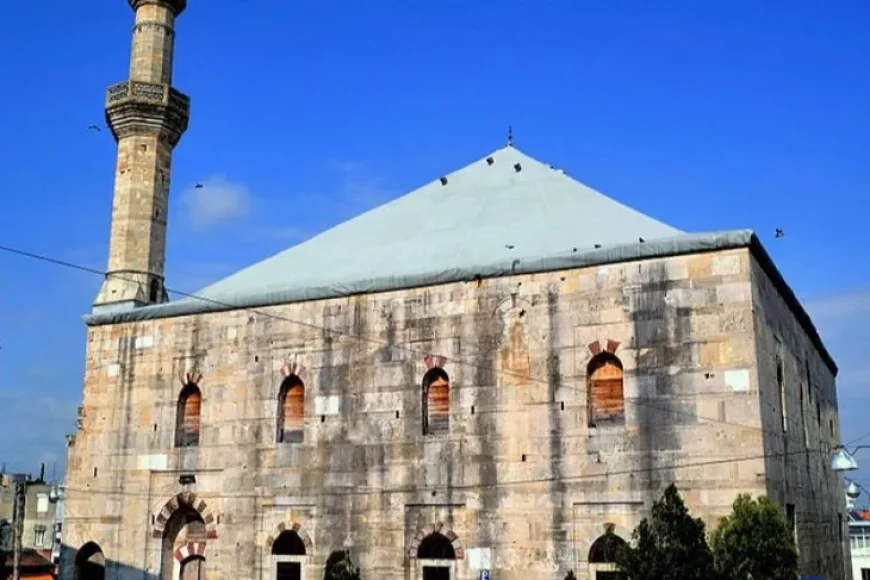


WISE NEWS PRESS / KOMOTINI, GREECE
The Turkish minority in Western Thrace has issued a sharp condemnation following the Greek government's unilateral appointment of a Mufti in Didymoteicho, an act described as a total disregard for the minority's will and religious autonomy.
The move comes after Emin Serif, appointed by the Greek Ministry of Education, Religious Affairs, and Sports, took an oath in Athens on January 9, 2026, to officially begin his tenure. While Greek Minister Sofia Zaharaki defended the process as "modern and transparent" and compliant with the Lausanne Treaty, minority representatives argue that such appointments violate international law and democratic principles.
Minority representatives reject the appointment
The Western Thrace Turkish Minority Advisory Board (BTTADK) stated that the appointment lacks legitimacy as it fails to reflect the free will of the minority community. The board highlighted that the appointed Mufti previously prayed in Greek during a mosque opening, demonstrating a disconnect from the community's religious and cultural sensitivities. BTTADK expressed concern that similar impositions might soon be applied in the cities of Xanthi and Komotini.
Support from international federations and Turkey
Halit Habip Oglu, President of the Federation of Western Thrace Turks in Europe (ABTTF), criticized the 2022 legislation titled "Modernization of Muftis in Thrace," stating it effectively turned autonomous religious offices into state departments under government control. In a supporting statement, Abdulhadi Turus, President of Türkiye’s Presidency for Turks Abroad and Related Communities (YTB), emphasized that they stand firmly with the minority's right to elect their own religious leaders under international law.
The legal struggle for religious autonomy
The Mufti issue remains a core grievance for the Turkish minority in Greece, who maintain that religious leaders should be elected by the community, as established by the 1913 Treaty of Athens and the 1923 Treaty of Lausanne. However, Greece continues to treat Muftis as civil servants, leading to a dual system where the minority recognizes its own elected Muftis while the state recognizes its own appointees. Minority leaders have called on Athens to engage in a "sincere and constructive dialogue" to resolve the crisis in accordance with human rights standards.




What's Your Reaction?
 Like
0
Like
0
 Dislike
0
Dislike
0
 Love
0
Love
0
 Funny
0
Funny
0
 Wow
0
Wow
0
 Sad
0
Sad
0
 Angry
0
Angry
0

Editor | Wise News Press — Delivering accurate, timely global news with integrity, insight, and editorial responsibility.



















Comments (0)