


Avoid deodorant before mammography to prevent misdiagnosis
Radiology expert Assoc. Prof. Dr. Özgür Sarıca warns that using deodorants containing aluminum before a mammogram can mimic calcium deposits and lead to incorrect results.



WISE NEWS PRESS / ISTANBUL, TÜRKİYE
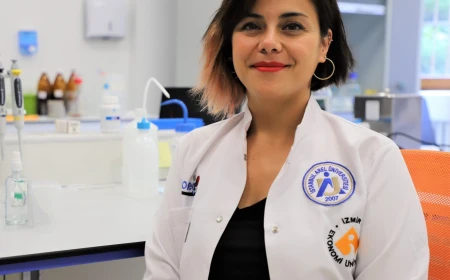
Radiology Specialist Assoc. Prof. Dr. Özgür Sarıca warned that personal care products like deodorants and powders used before a mammogram can create misleading marks on images, potentially leading to a misdiagnosis.
Early detection remains the most critical step in successfully treating breast cancer. However, many women delay regular screenings due to misinformation regarding the procedure. According to Assoc. Prof. Dr. Sarıca from Anadolu Medical Center, clarifying the "known wrongs" about mammography is essential to ensure the screening process proceeds accurately and healthily.
The hidden risk in personal care products
Assoc. Prof. Dr. Sarıca highlighted that certain deodorants, powders, and creams containing aluminum hydrochloride can interfere with imaging. "These products can appear on a mammogram as tiny calcium (lime) deposits," Sarıca explained. "This situation can lead to a misleading interpretation of the results. Patients are advised not to apply these products to the underarm or breast area on the day of the appointment."
Common misconceptions: Pain and radiation
Addressing the fear of pain during the procedure, Sarıca noted that while the breast is compressed between two plates to stabilize the tissue and ensure a clear image, the discomfort only lasts for 3 to 4 seconds. The entire appointment generally takes about 10 to 15 minutes.


Regarding radiation concerns, Sarıca stated that the X-ray dose used in modern digital mammography is extremely low. "We are already exposed to radiation in daily life through digital devices and air travel. The dose received during a mammogram is negligible compared to the life-saving benefit of early diagnosis," he added.


Guidelines for regular screening
For women over the age of 40, an annual mammogram is highly recommended. For those with dense breast tissue—where there is more parenchymal tissue than fat—ultrasound or contrast imaging may be added to the screening to increase sensitivity.
Assoc. Prof. Dr. Sarıca also emphasized the importance of bringing previous test results to new appointments. "Comparing old and new images is vital to understanding whether a lesion is stable or if a new formation has occurred. If a lesion remains the same size and shape over time, it is usually considered benign," he concluded.
What's Your Reaction?
 Like
0
Like
0
 Dislike
0
Dislike
0
 Love
0
Love
0
 Funny
0
Funny
0
 Wow
0
Wow
0
 Sad
0
Sad
0
 Angry
0
Angry
0

Editor | Wise News Press — Delivering accurate, timely global news with integrity, insight, and editorial responsibility.


















Comments (0)