



'Blue gold' and oil drive escalating US-Venezuela conflict
As Washington bombs Caracas, the conflict reveals a deeper battle for the Orinoco Belt’s vast oil and strategic rare earth element reserves.
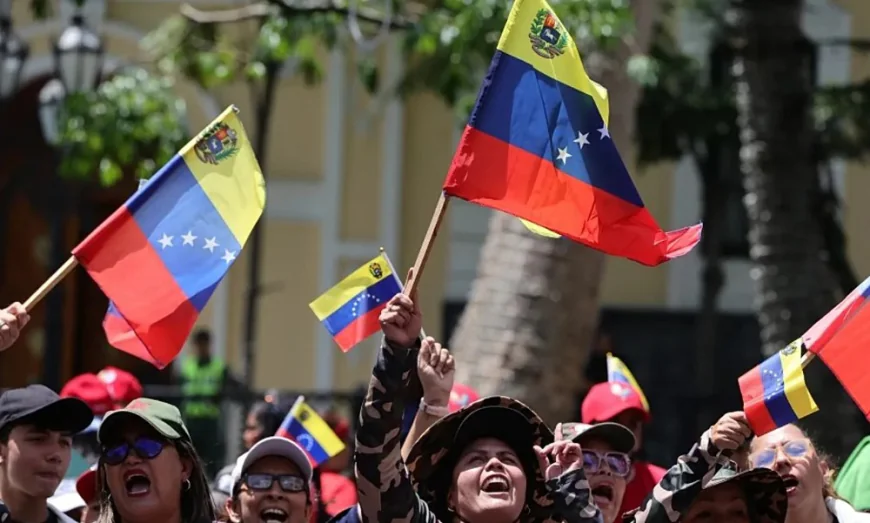


WISE NEWS PRESS / ANKARA, TURKEY — JAN. 3, 2026
The United States administration has launched air strikes on Caracas, escalating the political crisis into open conflict after President Donald Trump announced the capture of Venezuelan leader Nicolas Maduro. While Washington justifies the intervention through allegations of terrorism and illicit trafficking, the conflict underscores a deepening global battle for control over strategic energy resources and rare minerals.
Following the Saturday bombardment, the US administration cited Maduro’s alleged links to criminal networks and electoral fraud as the primary triggers for the operation. However, officials in Caracas argue that the intervention is a calculated move to seize the nation's vast petroleum reserves and its deposits of coltan, the strategic mineral known as "blue gold."
'They took our oil and we want it back'
Beyond political rhetoric, the US has increasingly placed energy security at the center of its interventionist policy. President Trump recently referenced the 2007 dispute between Venezuela and the American energy giant ExxonMobil to justify the current stance.
"They took our energy rights. It wasn't that long ago, they took our oil and we want it back," Trump stated, referring to the nationalization policies of the Hugo Chávez era.
The dispute centers on the Orinoco Oil Belt, one of the world's richest repositories of heavy crude. In 2007, Chávez mandated that state-run PDVSA hold a majority stake in all projects, forcing exits by majors like ExxonMobil and ConocoPhillips. This move precipitated years of sanctions that have since crippled the Venezuelan economy.


The paradox of a wealthy land
The last decade of sanctions has created a profound paradox in Venezuela: a nation sitting on immense wealth yet suffering from economic collapse. According to data from El Pais and international monitoring bodies, Venezuela possesses:
-
The largest oil reserves in the world.
-
The sixth-largest natural gas reserves globally.


-
Latin America’s largest gold deposits.
-
Significant reserves of iron, bauxite, and diamonds.
Crucially, the country is also rich in rare earth elements (REEs) like coltan and thorium. These materials are essential components for smartphones, electric vehicles, and defense systems, making them highly coveted in the modern tech-driven economy.
The Orinoco Mining Arc and lost billions
In 2016, seeking to offset falling oil revenue, the Venezuelan government designated 12 percent of the national territory as the Orinoco Mining Arc. The government estimates the area holds over 8,000 tons of gold.
However, the wealth has failed to reach the public. According to Transparency Venezuela, only 14 percent of the value of minerals extracted in 2024 reached the Central Bank. The vast majority of these resources are reportedly siphoned off by criminal syndicates and smuggling networks, turning the region into a hub for environmental destruction rather than development.
Rare earth elements in the trade war
The conflict also plays a critical role in the broader US-China trade war. China currently controls approximately 70 percent of global rare earth mining and 87 percent of processing capacity. With Beijing restricting exports, the US is aggressively seeking alternative supply chains in Greenland, Ukraine, and Venezuela.
This global search for resources also touches Turkey. In 2022, a massive rare earth reserve estimated at 694 million tons was discovered in Beylikova, Eskişehir. According to a Bloomberg report from October 2025, US officials have engaged in talks with Turkey to develop these assets, as negotiations between Ankara and Beijing stalled over technology transfer issues.
What's Your Reaction?
 Like
0
Like
0
 Dislike
0
Dislike
0
 Love
0
Love
0
 Funny
0
Funny
0
 Wow
0
Wow
0
 Sad
0
Sad
0
 Angry
0
Angry
0

Editor | Wise News Press — Delivering accurate, timely global news with integrity, insight, and editorial responsibility.















Comments (0)