



What Do Öcalan, PKK, YPG, and DEM Expect from Said Nursi Posters?
Is the "Democratic Islam" message and the display of Said Nursi posters a sincere shift or a strategic move? A deep political analysis through the lens of Risale-i Nur principles.


Yusuf İnan
Journalist | Opinion Writer
Wise News Press – Izmir, Türkiye
What Do Öcalan, PKK, YPG, and DEM Expect from Said Nursi Posters?
The Congress of the Mesopotamia Islamic Research Federation, held in Diyarbakır, witnessed a striking scene where political cards are being reshuffled. The hall, decorated with posters of Said Nursi, and the reading of Abdullah Öcalan’s messages emphasizing "Democratic Islam" from İmralı, confirmed that the terrorist organization and its political extensions are seeking a new reference point. However, the primary question the Turkish and Middle Eastern media are focusing on is this: Will the posters hung on the walls be enough to end the hostility in hearts and at the end of gun barrels?
Poster Politics or the Nature of Truth?
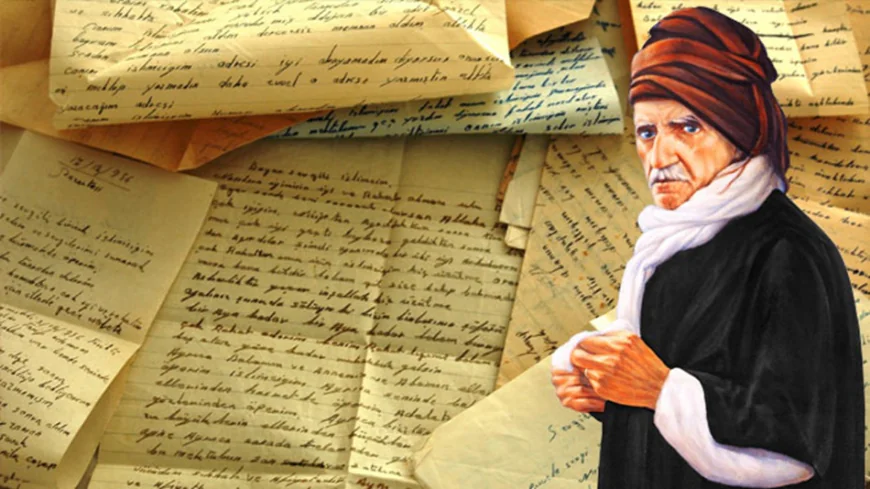
The efforts of PKK leaders and DEM Party deputies to frame their demands for the Kurdish Quran and Kurdish sermons with portraits of Bediüzzaman Said Nursi will not exceed political pragmatism unless they are based on the law of brotherhood at the core of Risale-i Nur. Our Kurdish brothers have already been a religious society for centuries, reading Risale-i Nur, going to their mosques, and performing their worship without any Turkish-Kurdish distinction. If Abdullah Öcalan, Mazlum Abdi, and the DEM Party are truly seeking a solution, they must go beyond hanging posters and listen to this striking warning of Said Nursi:
"The fortunate one is he who, in order to gain a sweet, great pool filtered from the Kawsar of the Quran, throws his personality and egoism, which are like a piece of ice, into that pool and melts them."


Bediüzzaman proposes melting the egoism—which is like a "piece of ice"—built on separatism into the common pool of Islam and brotherhood. Today, it falls upon the PKK and YPG to melt their "separatist" ice on the grounds of Syria and Türkiye and aspire to the peace of that great pool that embraces the entire geography.
The Historical Answer to Sheikh Said: "No Sword Shall Be Drawn Against the Turkish Nation!"
Those who claim to take Bediüzzaman as a reference must carefully analyze his stance against the legitimate state and the unity of the nation. Said Nursi gave the greatest lesson to those who see weapons as a solution today with his answer to Sheikh Said, who came to him with a proposal for rebellion:
"The Turkish nation has served Islam for centuries and has produced many saints. No sword shall be drawn against their grandchildren. You must not draw one either."


This principle is a manifesto of peace today, not only for Türkiye but for the entire Middle East. The way to bury weapons deepest is to stop harboring hostility against the children of a nation that has been the standard-bearer of Islam for centuries.
The Project of the Future: Medresetü'z-Zehra
If the DEM Party and regional politicians are sincere, they should focus on the Medresetü'z-Zehra project, which Bediüzzaman dreamed of establishing in Van, where religious and modern sciences would be taught together. Said Nursi’s vision sees languages not as tools of conflict, but as riches: "Arabic is fard (obligatory), Kurdish is jaiz (permissible), Turkish is lazim (necessary)."
When there is an ideal of a university where Turkish, Kurdish, and English education will be provided in the light of science, what has constant negativity and "trench politics" brought to the Kurdish people other than destruction?
Great Risk: The Gaza Tragedy and the Fate of the Middle East
Actors in the region must well analyze the tragedies experienced from the Balkans to Palestine. The tragedies experienced for nearly two centuries by those who drew swords against the Ottomans or became tools of imperialist powers and stabbed their brothers in the back are a testament to be learned from. It must be stated clearly: if the PKK and YPG continue to pour fuel on hostility, they will face a great collapse once the imperialists' "expiration date" is over.
While Türkiye is struggling today for Gaza, it is at the end of its patience against a structure that pits brother against brother within its borders and right next to them. Those who insist on the wrong path face the risk of receiving not a single gram of help from Türkiye—their only safe haven—when they are subjected to a similar persecution tomorrow, like the one in Gaza. It is a historical necessity for a wise statesman like MIT President İbrahim Kalın, who knows the spirit of Risale-i Nur, to explain these truths clearly to his interlocutors.
Conclusion: Meeting on the Line of Brotherhood
The Turkish-Kurdish distinction, which is attempted to be created artificially in this country, has found no place in the hearts of the people. In a sociology where even those who have defended the rights of Martyr Families and Veterans for 27 years have Kurdish daughters-in-law, ethnic separatism is a form of suicide.
Let us end our article with that famous good news of Bediüzzaman in Tbilisi:
"In Asia and the Islamic world, three lights are starting to unfold one after another... Every winter has a spring, every night has a day."
The spring of the Middle East and the Kurdish people is not in terror, but in that magnificent spirit of unity in Bediüzzaman’s "Uhuvvet" (Brotherhood) Treatise. Weapons must be buried, the ice of egoism must be melted, and a new world must be established in the pool of "Believers are brothers."
Yusuf İnan
Yusuf İnan is a journalist and writer.
He serves as Editor-in-Chief of WiseNewsPress.com, SehitlerOlmez.com, and YerelGundem.com.
He specializes in strategic and political analysis on Turkish and global affairs.
What's Your Reaction?
 Like
0
Like
0
 Dislike
0
Dislike
0
 Love
0
Love
0
 Funny
0
Funny
0
 Wow
0
Wow
0
 Sad
0
Sad
0
 Angry
0
Angry
0

Editor | Wise News Press — Delivering accurate, timely global news with integrity, insight, and editorial responsibility.











Comments (0)